Setting up an irrevocable trust typically costs between $3,000 and $10,000 or more in attorney fees, depending on the type of trust and the complexity of your estate. That range surprises a lot of families, but once you understand what drives the price, the numbers make sense.
Table of Contents
- What Is an Irrevocable Trust and Why Does It Cost More?
- Typical Cost Ranges for Setting Up an Irrevocable Trust
- Key Factors That Affect the Cost of an Irrevocable Trust
- Types of Irrevocable Trusts and Their Individual Costs
- Ongoing Costs After the Trust Is Established
- Is the Cost Worth It? When an Irrevocable Trust Makes Financial Sense
- Frequently Asked Questions
- Conclusion
What Is an Irrevocable Trust and Why Does It Cost More?
 An irrevocable trust is a legal arrangement where you transfer assets, your home, savings, investments, into a trust that you no longer own or control. Once it's done, it's done. You can't take assets back or change the terms without court approval or agreement from every beneficiary.
of irrevocable trusts, assets held inside one are generally removed from your taxable estate, which can reduce estate taxes significantly for larger estates. They also avoid the public probate process entirely, keeping your family's financial affairs private.
So why does this type of trust cost more than a simple will or even a revocable living trust? The answer is permanence. Because you're making decisions you cannot easily undo, the drafting has to be precise. An attorney needs to think carefully about how the trust is structured, what assets go in, who controls them, and what happens under dozens of different scenarios.
A revocable trust, where you keep full control, can be amended anytime. Mistakes are fixable. But with an irrevocable trust, a drafting error could lock in a problem for decades. That requires more attorney time, more careful review, and in many cases, coordination with a tax professional or financial advisor.
There's also a compliance layer. An irrevocable trust has its own tax identification number and files its own tax returns. It's a separate legal entity, which means setup involves more than just drafting a document. It involves funding the trust correctly, transferring deeds, retitling accounts, and sometimes coordinating with lenders or financial institutions.
That's the work you're paying for, and for Brooklyn families protecting a home or planning for long-term care costs, it's work that genuinely matters. At Alatsas Law Firm, we walk clients through how to set up a trust for asset protection in New York, including every step from choosing a trustee to funding the trust properly after signing.
Key Takeaway: An irrevocable trust costs more than a revocable one because permanence demands precision, and getting it wrong has consequences that can last a lifetime.
Typical Cost Ranges for Setting Up an Irrevocable Trust
Costs vary widely based on location, trust type, and attorney experience. Here's a realistic breakdown of what New York families typically pay.
| Trust Type | Typical NY Cost Range | Best For | Notes |
| Simple Irrevocable Trust | $3,000 – $5,000 | Basic asset transfer or life insurance holding | Fewer assets, straightforward structure |
| Medicaid Asset Protection Trust (MAPT) | $3,400 – $10,200+ | Protecting a home from Medicaid spend-down | Includes deed transfer and Medicaid planning |
| Special Needs Trust | $3,500 – $6,000 | Beneficiaries with disabilities receiving government benefits | Must preserve benefits eligibility |
| Irrevocable Life Insurance Trust (ILIT) | $2,500 – $5,000 | Removing life insurance from taxable estate | Requires Crummey notices annually |
| Charitable Remainder Trust (CRT/CRUT) | $5,000 – $15,000+ | High-asset estates with charitable goals | Complex tax calculations required |
| Full Estate Planning Package | $2,500 – $7,000+ | Families wanting trust, will, POA, healthcare proxy together | More cost-effective than individual documents |
These figures reflect New York attorney fees, which tend to run higher than national averages. Estate planning attorneys in New York City typically charge flat fees for trust work, though hourly rates generally fall between $300 and $600 per hour for complex matters.
A DIY online trust template might cost $50 to $500. But in New York, a poorly drafted irrevocable trust can fail its purpose entirely, leaving your assets exposed to Medicaid recovery or estate taxes that proper planning would have avoided. The cost of fixing a bad document is almost always more than the cost of doing it right the first time.
Most attorneys also include additional documents as part of a package: a pour-over will, a durable power of attorney, and a healthcare proxy. Bundled together, these packages typically cost $2,500 to $5,000 and offer better value than paying for each document separately. You can get a clearer picture of what New York estate planning costs by reviewing our NY trust and will cost calculator at Alatsas Law Firm.
Beyond attorney fees, expect a few additional line items. Recording a new deed with the county clerk's office typically costs $100 to $500. Some financial institutions charge small fees to retitle accounts. And if you use a professional trustee, ongoing fees usually run 0.5% to 1% of trust assets per year.
Pro Tip: Ask your attorney upfront whether they charge a flat fee or hourly rate for trust work. Flat fees are common for standard irrevocable trusts and make budgeting much easier, no surprise invoices if the drafting takes longer than expected.
Key Factors That Affect the Cost of an Irrevocable Trust
No two irrevocable trusts cost exactly the same. Several factors push the price up or down, and understanding them helps you go into any attorney consultation with realistic expectations.
Type of Trust
This is the single biggest cost driver. A Medicaid Asset Protection Trust requires careful coordination between estate planning goals and New York's five-year Medicaid look-back period. A charitable remainder trust involves complex actuarial calculations. A basic irrevocable life insurance trust is comparatively simpler. The more moving parts, the more attorney time.
Complexity of Your Assets
A trust holding one Brooklyn co-op apartment is straightforward. A trust that needs to hold multiple properties, a small business interest, investment accounts, and a life insurance policy is a different job entirely. Each asset type may need its own funding instructions. Real estate requires a new deed. Bank accounts need retitling. Business interests may need their own transfer documents.
Attorney Experience and Location
An attorney who specializes in elder law and estate planning in Brooklyn will typically charge more than a general-practice attorney upstate. That premium usually reflects real depth, knowing New York's specific Medicaid rules, tax exemptions, and trust law. For an irrevocable trust where mistakes are permanent, experience matters more than cost savings.
Whether It's Part of a Package
A standalone irrevocable trust document will cost more per item than the same trust created as part of a full estate planning package. Most families benefit from having a will, power of attorney, and healthcare proxy alongside their trust anyway. Bundling them is both smarter planning and more cost-effective.
Funding the Trust After Signing
Some attorneys include funding assistance in their flat fee. Others charge separately for deed preparation, county recording fees, and help retitling financial accounts. Always ask what's included in the quoted price. An unfunded trust is legally worthless, it's a container with nothing inside.
New York's legal landscape also adds some unique costs. The state has its own estate tax with a cliff provision, meaning estates just over the exemption threshold can face a much larger tax bill than expected. An attorney who understands this nuance may recommend trust structures that a less experienced practitioner would miss entirely. Legal professionals working in other specialized areas face similar complexity, for example, maritime personal injury lawyer firms operate under federal admiralty law that requires deep specialty knowledge, much like New York estate planning demands specific expertise in state Medicaid and tax rules.
Types of Irrevocable Trusts and Their Individual Costs
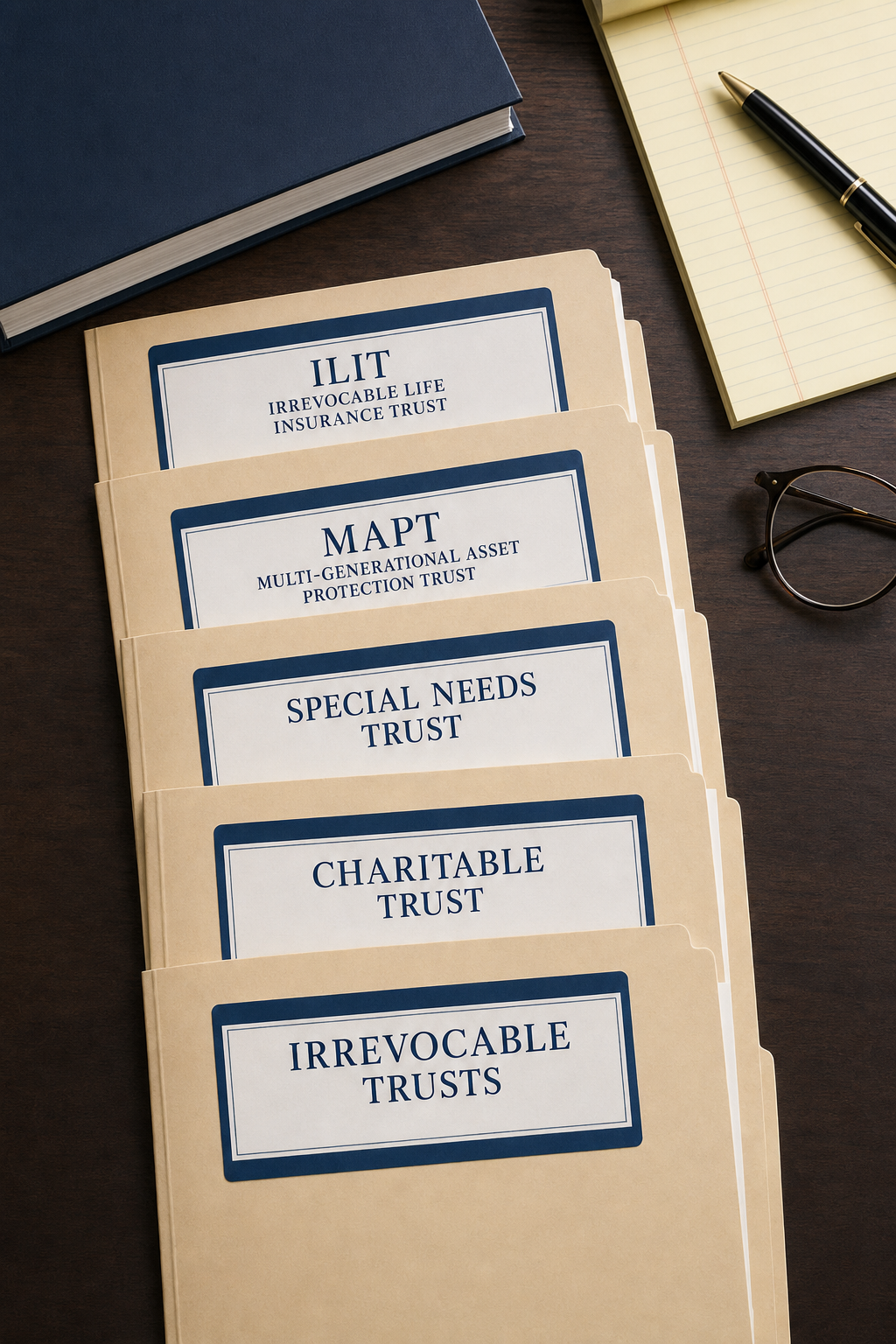 Irrevocable trusts aren't one-size-fits-all. Each type solves a different problem, carries different drafting complexity, and lands at a different price point. Here's what each one actually does, and what it typically costs in New York.
Medicaid Asset Protection Trust (MAPT)
This is the trust most Brooklyn and Queens families ask about first. A MAPT lets you transfer your home (and sometimes other assets) into an irrevocable trust so that those assets aren't counted for Medicaid eligibility after the five-year look-back period. You can still live in your home. But legally, you no longer own it, the trust does.
Cost in New York runs $3,400 to $10,200 or more, depending on the number of properties involved and whether the package includes deed preparation, recording fees, and related documents like a life estate or retained income provisions. You can explore more detail on our guide to Medicaid Asset Protection Trusts pros and cons in New York.
Irrevocable Life Insurance Trust (ILIT)
If you own a life insurance policy when you die, the death benefit gets included in your taxable estate. An ILIT solves this. The trust, not you, owns the policy from the start. When you die, the proceeds go to your beneficiaries outside your estate, potentially saving a significant amount in estate taxes for larger estates.
Setup costs generally fall between $2,500 and $5,000. Annual maintenance requires Crummey notices, formal letters to beneficiaries each time a premium payment is made, to preserve the gift tax annual exclusion. Some attorneys charge a small ongoing fee for this; others handle it as part of the original flat fee.
Special Needs Trust
Parents of children with disabilities often worry about leaving money directly to a child receiving Supplemental Security Income (SSI) or Medicaid. An inheritance above a certain amount can disqualify them from those benefits entirely. A special needs trust holds assets for that child without affecting eligibility.
These trusts require precise language around distribution standards. Cost ranges from $3,500 to $6,000 in New York, and they're worth every dollar for families in this situation. Getting the language wrong can mean a child loses essential government benefits at the exact moment you intended to help them.
Charitable Remainder Trust (CRT / CRUT)
A charitable remainder trust lets you transfer appreciated assets, say, stock with a very low cost basis, into a trust that sells them tax-free, then pays you an income stream for life. When you die, the remainder goes to a charity you've named. You also get a partial income tax charitable deduction upfront.
These are complex. The actuarial calculations alone require specialized expertise, and the ongoing administration costs are higher than other trust types. Expect $5,000 to $15,000 or more for setup, plus annual administration fees. They make the most sense for people with large appreciated assets and genuine charitable intent.
Qualified Personal Residence Trust (QPRT)
A QPRT lets you transfer your home to your children at a reduced gift tax value, while retaining the right to live there for a set number of years. If you outlive the trust term, the home passes to your children at a fraction of its full fair market value for gift tax purposes.
Setup costs are similar to a MAPT, generally $4,000 to $8,000 in New York. The catch: if you die before the trust term ends, the home reverts to your estate. As one estate attorney resource explains, it's a bit like "heads you win, tails you do not lose." If you outlive the term, you've transferred a home worth far more than the taxable gift amount.
Ongoing Costs After the Trust Is Established
The setup fee is a one-time expense. But an irrevocable trust carries ongoing costs that families often don't anticipate. Planning for these upfront prevents surprises later.
Annual Tax Filings
An irrevocable trust is a separate tax entity. It files its own federal return (Form 1041) each year and, depending on income, may also file a New York state return. Tax preparation for a trust typically costs $500 to $1,500 per year, depending on the volume and complexity of trust income. If the trust holds rental property or investment accounts that generate income, expect the higher end of that range.
Trustee Fees
If a family member serves as trustee, this may cost nothing. But many families choose a professional trustee, a trust company or estate attorney, especially when there's conflict risk among beneficiaries or when the trust holds significant assets. Professional trustees typically charge 0.5% to 1% of trust assets annually for the first million dollars, with lower rates for larger estates. On a $500,000 trust, that's $2,500 to $5,000 per year.
Account Maintenance and Deed Updates
If the trust holds real estate and you refinance, sell, or acquire new property, additional deed work may be required. Some transactions trigger recording fees of $100 to $500. Financial institutions may also charge small administrative fees when accounts are retitled.
Trust Amendments and Administrative Updates
An irrevocable trust is difficult to change by definition, but not impossible. Under certain circumstances, with beneficiary consent or through a legal process called decanting, modifications can be made. This requires attorney time and can cost $1,000 to $3,000 or more depending on complexity. Life events like a beneficiary's death or a major change in tax law may also prompt a review.
The honest picture: for a modest estate, ongoing costs might run $1,000 to $2,000 per year. For a larger or more complex trust, plan for $3,000 to $6,000 annually. These costs don't eliminate the value of the trust, but they should factor into your decision about whether this type of planning makes sense for your situation.
Is the Cost Worth It? When an Irrevocable Trust Makes Financial Sense
The cost to set up an irrevocable trust is real. But for the right families, it's far less than what they'd spend without one. Here's how to think about whether the investment makes sense for you.
Medicaid Planning for Long-Term Care
Nursing home care in New York can exceed $14,000 per month. Without planning, a family home built over decades can be consumed by that cost, or subject to Medicaid estate recovery after death. A Medicaid Asset Protection Trust, established at least five years before applying for Medicaid, can shield that home from both outcomes. Paying $5,000 to $8,000 now to protect a $700,000 Brooklyn home is a straightforward calculation.
Estate Tax Reduction
New York has its own estate tax with an exemption currently around $7.16 million, but a cliff provision that can dramatically increase tax exposure for estates just over that threshold. For families with larger estates, the right irrevocable trust structure can remove significant assets from the taxable estate entirely. The tax savings often exceed the setup cost many times over.
Protecting Assets from Creditors
A revocable trust offers no creditor protection. Because you still control the assets, creditors can still reach them. An irrevocable trust, properly structured, removes assets from your legal ownership, which means they're generally outside the reach of future creditors and lawsuits. This matters most for business owners, medical professionals, and anyone with meaningful lawsuit exposure. Note that you cannot fund an irrevocable trust specifically to defeat a known creditor, courts can and do unwind those transfers.
When It May Not Be Worth It
If your total assets are under $100,000, the cost of setting up and maintaining an irrevocable trust likely outweighs the benefit. A well-drafted will combined with beneficiary designations on financial accounts may accomplish most of your goals at far lower cost. The trust math changes once you have real estate or assets above that threshold.
At Alatsas Law Firm, we've helped hundreds of Brooklyn, Queens, and Staten Island families think through exactly this question. Our approach is always to tell you honestly whether a trust fits your situation, not to push a more expensive option when a simpler one will do. We understand that you've worked hard for what you have, and the goal is protecting it in the most usable way possible.
"The best time to set up an irrevocable trust is before you need one, when you're healthy, have time to plan carefully, and the full range of options is still available to you."
Frequently Asked Questions
How much does it cost to set up an irrevocable trust in New York?
In New York, expect to pay between $3,000 and $10,000 or more in attorney fees, depending on the type of trust and complexity of your estate. A Medicaid Asset Protection Trust typically runs $3,400 to $10,200. A simpler irrevocable life insurance trust may cost $2,500 to $5,000. Location matters too, New York City attorneys generally charge more than upstate practices for the same work.
Can I set up an irrevocable trust without an attorney?
Technically yes, but it's a significant risk. Online templates cost $50 to $500, but irrevocable trusts require legally precise language in New York. A drafting error can make the trust fail its purpose, losing Medicaid protection, triggering estate taxes, or disqualifying a beneficiary from government benefits. The cost of fixing a badly drafted trust almost always exceeds what proper legal help would have cost upfront.
What ongoing costs should I expect after the trust is set up?
Plan for annual trust tax return preparation ($500 to $1,500), professional trustee fees if applicable (0.5% to 1% of assets per year), and occasional deed recording or account retitling fees. Total annual costs for a modest trust often run $1,000 to $2,500. More complex trusts with multiple assets or professional trustees can cost $3,000 to $6,000 per year to maintain properly.
Is an irrevocable trust worth the cost?
For most families with a home and assets over $100,000, yes. A Medicaid Asset Protection Trust can shield a $600,000 home from nursing home spend-down, saving far more than the $5,000 to $8,000 setup cost. Irrevocable trusts also avoid probate, reduce estate taxes for larger estates, and protect assets from creditors. For smaller estates, simpler planning tools may deliver similar benefits at lower cost.
How long does it take to set up an irrevocable trust?
Drafting the trust document typically takes two to four weeks once your attorney has a complete picture of your assets and goals. Funding the trust, transferring real estate deeds and retitling financial accounts, takes another two to eight weeks depending on how many assets are involved and how quickly institutions process the paperwork. The entire process from first consultation to fully funded trust usually takes one to three months.
What's the difference in cost between a revocable and irrevocable trust?
A revocable living trust in New York typically costs $1,500 to $3,000. An irrevocable trust generally runs $3,000 to $10,000 or more. The price gap reflects the added complexity, irrevocable trusts require more careful drafting because the terms are permanent, and they often involve additional steps like Medicaid planning analysis, actuarial calculations, or coordination with tax advisors that revocable trusts don't need.
Conclusion
The cost to set up an irrevocable trust ranges from $3,000 to $10,000 or more in New York, and the ongoing expenses are real, but for families protecting a home, planning for long-term care, or reducing estate taxes, that investment often pays back many times over. The right trust, drafted correctly, can shield decades of hard work from costs and outcomes that would otherwise be unavoidable. If you're weighing whether an irrevocable trust makes sense for your family, the team at Alatsas Law Firm offers an estate planning consultation where we review your situation honestly and give you a clear picture of your options before any work begins.