If you have ever wondered what are the risks of not having a will in New York, the real answer is not “the state takes care of it.” In Brooklyn, we see families blindsided by court delays, surprise heirs, and fights over who should be in charge, especially when there is a small business, a second marriage, or a family home.
Dying without a will (called “intestate”) can trigger a longer, more expensive probate process and an outcome that does not match what most parents and spouses assume. This guide explains New York intestacy laws, the probate process without a will in NY, and practical ways to protect your family. For a deeper overview, see What Happens When You Die Without a Will?.
Ready to get clarity fast? Start with Schedule a Free Consultation to discuss a will, trust options, and asset protection steps tailored to your Brooklyn family.
Key Takeaways
- Intestacy is a default plan, not your plan; New York decides who inherits and who controls the process.
- Court delays often grow because an “administrator” must be appointed before anyone can act.
- What are the risks of not having a will in New York? Higher conflict risk, higher costs, and inheritances that do not match your real-life family.
- Business ownership can get stuck when there is no clear succession or buy-sell direction.
- A customized estate plan prevents chaos with the right documents and beneficiary coordination.
Understanding New York Intestacy Laws: What Happens Without a Will
New York intestacy laws explained in plain English: if you die without a valid will, your “distributees” inherit under a statutory formula. That formula is found in EPTL 4-1.1, and it does not consider your relationships, your caregiving history, or the promises you made at the kitchen table. You can read the statute here: NY EPTL 4-1.1.
A common Brooklyn scenario is a blended family. A parent remarries, keeps the co-op in their sole name, and assumes “my spouse will just handle it.” But intestacy splits the estate based on legal categories, not intentions. In many cases, the surviving spouse does not automatically inherit everything in NYS.
How New York distributes assets without a will
Under intestacy, the rules generally work like this (with important exceptions):
- If there is a spouse and children: the spouse receives the first $50,000 plus one-half of the balance; the children share the rest.
- If there is a spouse and no children: the spouse typically inherits the entire probate estate.
- If there are children and no spouse: the children inherit.
- If there are no close relatives: more distant kin may inherit, and in rare cases assets can escheat to the state.
This is where “what are the risks of not having a will in New York” starts to become concrete: intestacy can create co-owners who never expected to be tied together, especially around a home or a family business.
In practice, we also remind families that intestacy only controls “probate assets.” Joint accounts, payable-on-death designations, and retirement beneficiaries can override the family’s assumptions, which leads directly into the most common risks.
Common Risks of Dying Intestate in New York Families
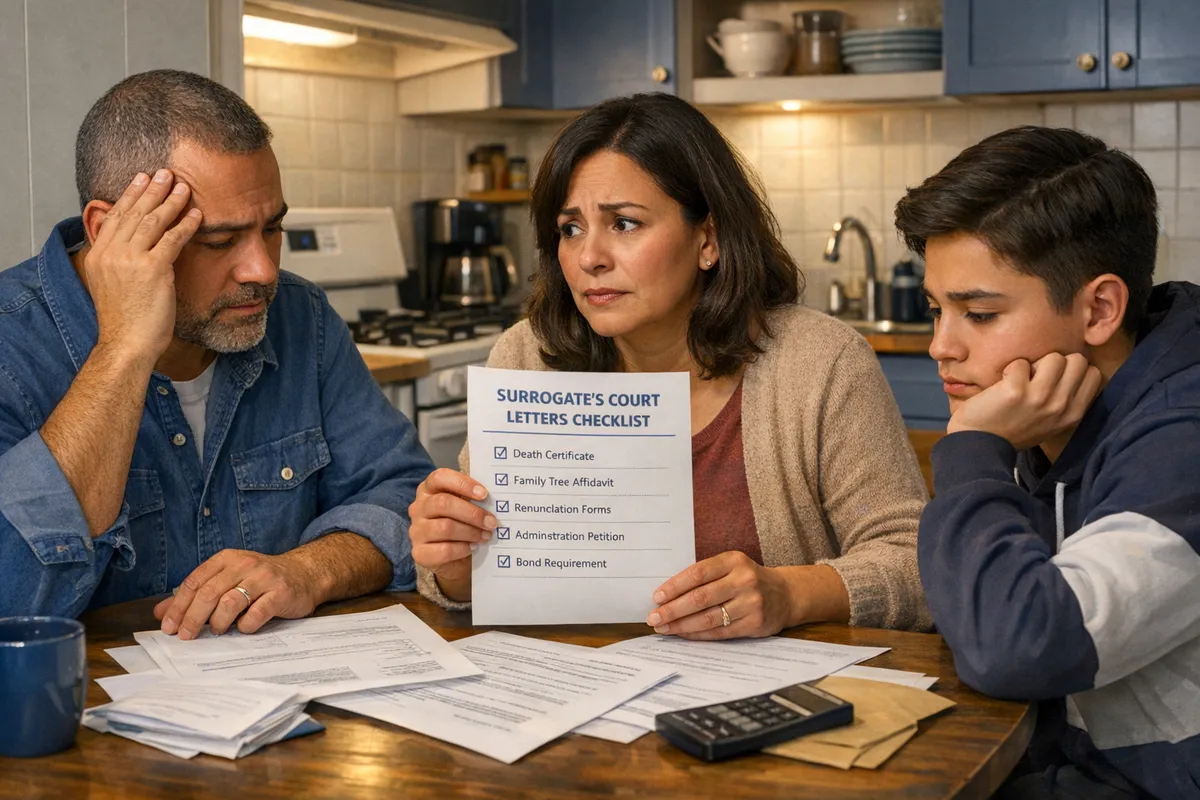
The biggest risk is not just who inherits, it is the stress and conflict created while everyone waits for authority to act. When families ask what are the risks of not having a will in New York, they usually picture a simple transfer. What they get is uncertainty.
One spouse may need access to funds immediately for rent, the mortgage, or payroll for a small business. One adult child may have been the caregiver and assumes they will “handle things.” Another child may be estranged and suddenly reappears. Intestacy gives them legal standing, even if the family dynamic says otherwise.
The problems you do not see coming
Here are the risks of dying intestate in New York that show up most often:
- Unintended distributions: A long-term partner who is not a spouse may inherit nothing, while distant relatives inherit something.
- No clear decision-maker: The court must appoint an administrator, and family members can fight over that role.
- Minor children create court supervision: If a child inherits, the court may require a guardian of property and restrictions on how money is managed.
- Business succession gets messy: A small business owner’s interest can be split among heirs who do not work in the business, complicating control, banking, leases, and vendor relationships.
- More opportunities for conflict and litigation: Even without a will contest, relatives can litigate over who serves, who gets paid back, and whether assets were mishandled.
If you are a caregiver or a middle-income family trying to protect a parent’s resources, dying intestate can also collide with long-term care planning. A late-stage crisis, like a nursing home admission, can force families into quick decisions about bills and benefits. If that resonates, read Using Retroactive Medicaid Benefits to Prevent Financial Disaster to understand one of the few tools that can sometimes soften a financial emergency.
The next question families ask is practical: “So what happens now, step by step, if there is no will?”
The Probate Process Without a Will in New York: What Families Should Expect
The probate process without a will in NY is not technically called probate, it is usually an “administration” proceeding in Surrogate’s Court. The effect feels similar, but the early stage is often slower because nobody has automatic authority.
The family must file a petition to have the court appoint an administrator (often the spouse or an adult child). Until “Letters of Administration” are issued, banks, co-op management, and many institutions will not deal with anyone. That waiting period is where families experience the sharpest pain from what are the risks of not having a will in New York.
Timeline and typical costs for intestate estates
Every case is different, but in our experience a straightforward administration can take roughly 9 to 18 months from filing to final distribution, and longer if there are hard-to-locate heirs, real estate issues, or disputes.
Costs usually include:
- Court filing fees: In New York, filing fees vary by estate value (often roughly $45 to $1,250). The fee schedule is published by the court system.
- Bond premiums (sometimes): If the court requires an administrator’s bond, premiums can add significant cost.
- Attorney and accountant fees: These vary by complexity; many estates see fees that feel like a percentage of the estate, but the real driver is time, disputes, and tax issues.
- Executor/administrator commissions: New York law allows commissions based on receipts and disbursements under SCPA 2307.
For official background on Surrogate’s Court proceedings, see the New York courts’ Surrogate’s Court resources here: NY Courts, Surrogate’s Court proceedings.
What happens to bank accounts and the home
A frequent question is what happens to a bank account when someone dies without a will in NY. If the account is solely in the decedent’s name, the bank typically freezes it until an administrator is appointed. Joint accounts often pass to the surviving joint owner, but families are often surprised when “joint for convenience” creates legal ownership issues.
Real estate is similar. A Brooklyn brownstone or condo owned solely in the decedent’s name becomes part of the intestate estate. If multiple heirs inherit, selling or refinancing often requires cooperation, court authority, and clean paperwork. If your estate includes meaningful personal property, families can reduce conflict by documenting and organizing it ahead of time. Memory Makers: Your Personal Possessions is a helpful starting point.
This is the point where local context matters. Brooklyn families have unique housing, family, and business realities that make intestacy especially risky.
Consequences of No Will in Brooklyn: Local Case Examples and Legal Insights
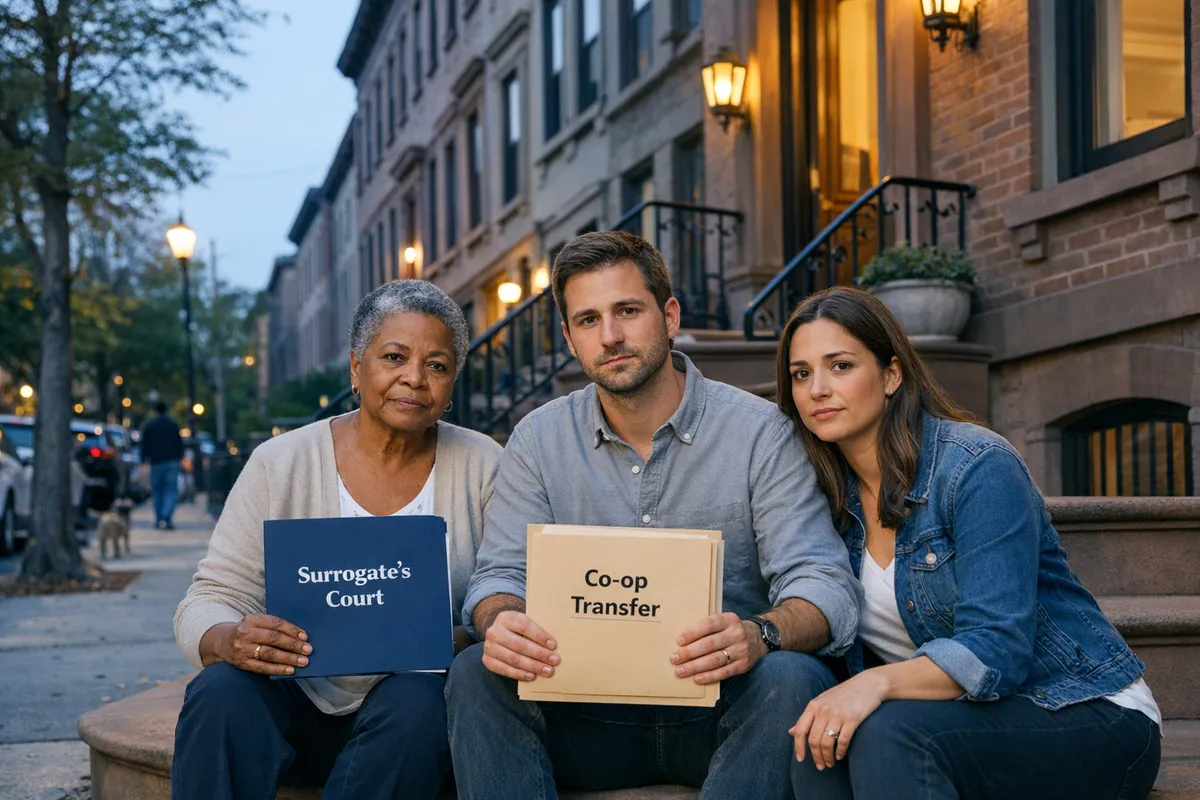
The consequences of no will in Brooklyn tend to hit hardest around housing and blended families. Co-ops can require board packages and strict transfer procedures, and multi-generational homes often have informal arrangements that intestacy does not recognize.
In our experience, a common scenario is a Sunset Park family where the parent owned the home but one adult child paid the property taxes and renovated the basement apartment. When the parent died intestate, the house did not “go to the caregiver.” It was split under intestacy, and the caregiver had to negotiate buyouts with siblings who lived out of state, all while keeping up with bills.
For divorcing or separated parents, intestacy can be even more unpredictable if beneficiary designations and ownership were never updated. If that is your situation, it is worth reviewing how major assets get divided and retitled in transitions. See 401(k) and Divorce: Guide to Splitting Retirement Funds.
Brooklyn families usually do not need “fancy” planning, but they do need planning that reflects real life. That is where a customized will and coordinated documents make the biggest difference.
How to Protect Your Family: Creating a Customized Will and Estate Plan in New York
The most effective way to reduce what are the risks of not having a will in New York is to name decision-makers and lock in your plan while you are healthy. A will lets you choose an executor, direct distributions, and plan for minor children. But for many Brooklyn families, a will works best as part of a broader estate plan.
A practical plan often includes (1) a will, (2) a power of attorney, (3) a health care proxy, and (4) beneficiary and title coordination. When kids turn 18, parents lose automatic authority to speak to banks and doctors. That is why we often recommend families read Coming of Age and Powers of Attorney.
For homeowners and small business owners, the next layer is whether a trust helps reduce court involvement and protect assets. If you are unsure, start with this plain-English guide: When should a family consider a trust as part of an estate plan, and what type of trust should they use?.
Want a simple, step-by-step process? Start with Alatsas Law Firm’s guided planning approach, then Start Your Journey to build a will and estate plan that matches your family, your home, and your business.
Frequently Asked Questions About Dying Without a Will in New York
Who inherits if there is no will in New York?
Your legal heirs inherit under New York’s intestacy statute, generally prioritizing a spouse and children, then more distant relatives if there is no spouse or child. The exact split depends on who survives you, and the spouse does not always inherit everything. Because intestacy only controls probate assets, beneficiary designations and joint ownership can change what actually transfers.
What are the disadvantages of not having a will?
The disadvantages include loss of control, added delay, and higher conflict risk, especially in blended families and when there is real estate or a business. A court must appoint an administrator, which can slow access to accounts and create disputes about who should be in charge. Many families also discover that the statutory distribution does not match what the parent “would have wanted.”
What happens to a bank account when someone dies without a will in NY?
A solely owned bank account is typically frozen until the Surrogate’s Court appoints an administrator and issues Letters of Administration. The bank usually will not release funds for bills or funeral costs without legal authority, although limited releases sometimes occur depending on the institution and circumstances. Joint accounts often pass to the surviving joint owner, which can create unintended outcomes if the account was added “just to help.”
Your Next Steps for Protecting a Brooklyn Family
What are the risks of not having a will in New York? For most families, it is the combination of delay, cost, and an outcome that does not reflect real relationships. Intestacy is a one-size-fits-all plan, and Brooklyn families are rarely one size.
The good news is that prevention is usually straightforward. A customized will and coordinated estate plan can name the right people, reduce court involvement, and protect a home or small business from becoming a battleground.
If you are ready to turn uncertainty into a clear plan, the next step is a conversation with a Brooklyn attorney who can translate the law into practical action for your family.