If you are asking, “can i give my daughter $50000 tax-free,” you are already ahead of most families who gift first and ask questions later. In our Brooklyn practice, we see small business owners, caregivers, and newly divorced parents try to help a child with a down payment or pay off debt, only to trigger tax filings or create Medicaid trouble they never expected.
The good news is that a $50,000 gift can often be made without your daughter paying income tax, and without you owing gift tax. The catch is that New York estate rules and Medicaid planning can change the “safe” answer.
For a caregiver-focused planning lens, see Know Your Parents’ Aging Strategies Before a Medical Crisis Hits.
Ready to get clarity before you transfer the money? Schedule a Free Consultation with Alatsas Law Firm to map the gift into a complete estate and long-term care plan.
Key Takeaways
- Your daughter typically owes no income tax on a gift because gifts are not treated like wages.
- “Can i give my daughter $50000 tax-free” often means “no gift tax due now,” but it may still require Form 709.
- New York has no separate gift tax, yet certain gifts can affect a future New York estate tax calculation.
- Medicaid’s look-back can penalize gifting, even when the IRS says the gift is tax-free.
- A structured plan (sometimes using an irrevocable trust) protects more than taxes, including long-term care eligibility and family harmony.
Understanding the Basics: Can I Give My Daughter $50,000 Tax-Free in New York?
Start with this simple rule: gifts are usually not income to the person receiving them. So if you give your daughter $50,000, she generally does not report it as taxable income on her federal or New York return.
Where people get tripped up is assuming “tax-free” means “no paperwork, no consequences, no planning needed.” The IRS has a federal gift tax system that is mostly about the giver, not the recipient. That is why the better question is often: can i give my daughter $50000 tax-free without owing gift tax, and without creating problems later?
Gift tax vs. income tax, and who pays
Gift tax is different from income tax, and the responsibility is usually on the person making the gift. If a gift exceeds the annual exclusion amount for the year, you may need to file a federal gift tax return (Form 709) even if you do not actually owe tax because of your lifetime exemption.
A common scenario is a Bay Ridge parent helping a daughter with a co-op down payment. The parent writes a single $50,000 check and later learns the mortgage lender wants a “gift letter,” and the accountant wants to know whether Form 709 is required. This is normal, and it is manageable.
For the IRS overview, see IRS Gift Tax.
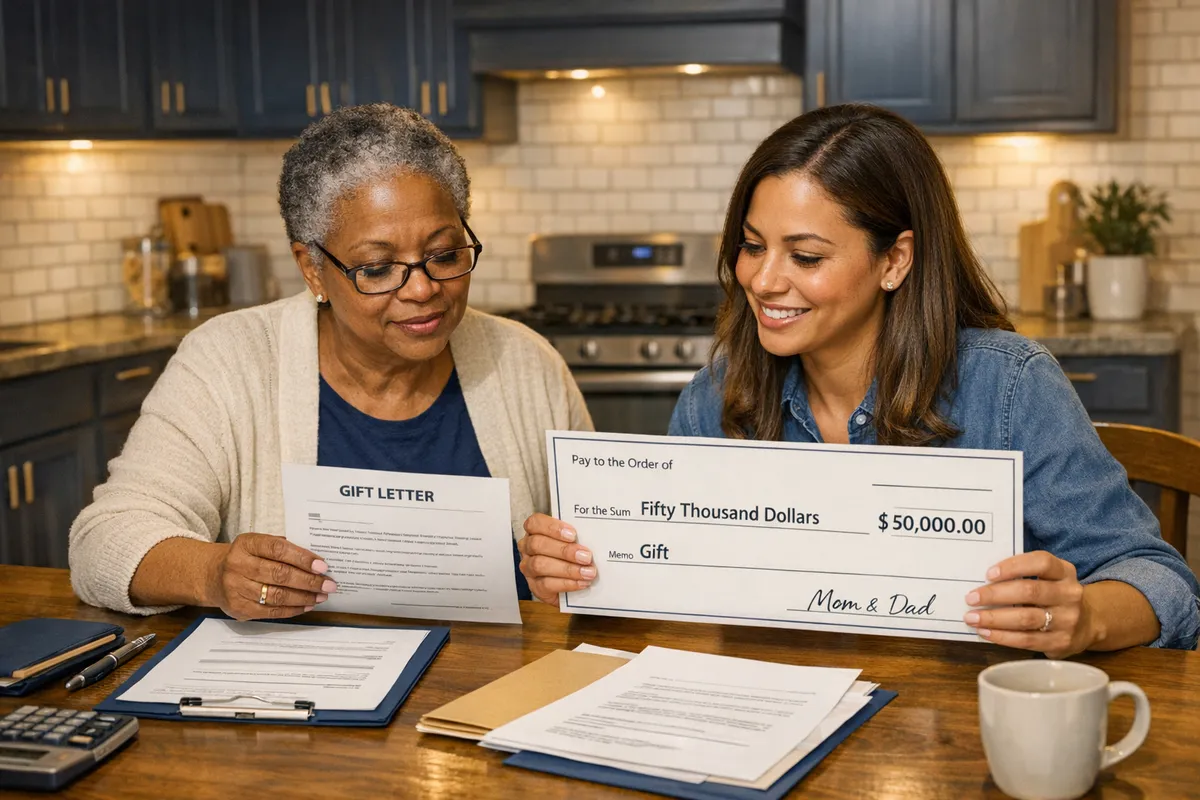
The next step is understanding how the federal rules interact with gift tax rules New York families worry about.
Navigating New York Gift Tax Rules and Annual Gift Tax Exclusion 2026
New York does not have a stand-alone gift tax, which surprises many people. That is why you will often hear that gifting money to family members is “easy” in New York. But the full answer to can i give my daughter $50000 tax-free requires a federal lens and a New York estate tax lens.
The annual gift tax exclusion 2026 and Form 709
The annual gift tax exclusion 2026 is a federal number that the IRS sets and adjusts for inflation. If your $50,000 gift to one person is more than that year’s exclusion, you typically file Form 709 to report the excess. Reporting does not automatically mean paying a check to the IRS. In many cases, the “over-the-exclusion” amount simply reduces your lifetime gift and estate tax exemption.
You can verify current filing guidance and forms here: About Form 709.
New York estate tax add-back concerns
New York’s estate tax can pull certain gifts back into the estate calculation if they were made close to death. In practice, this matters more for higher net worth households, but it can still surprise a successful small business owner who owns a storefront in Bensonhurst and a home in Sheepshead Bay. Even if there is no New York gift tax today, gifting can still change the future estate tax math.
If you are also reviewing basic estate documents as part of this decision, Last Wills and Testaments | Most Commonly Asked Questions is a helpful primer.
Now we need to talk about the issue that creates the biggest “I wish I knew this sooner” moment: Medicaid.
Medicaid Look-Back Period Explained: What Gifting Means for Long-Term Care Planning
The Medicaid look-back period explained in plain English is this: Medicaid checks whether you gave assets away, and it can penalize you for it. Families hear “tax-free gift” and assume it is also “Medicaid-safe.” It is not.
In New York, nursing home Medicaid has traditionally used a 5-year look-back. If you gift $50,000 during that window and later apply for nursing home Medicaid, the state can impose a penalty period, meaning Medicaid will not pay for your care for a period of time. You may be expected to privately pay, even if the money is already in your daughter’s account.
A real-world caregiver scenario we see in Brooklyn
In our experience, the most painful version looks like this: a middle-income parent gifts $50,000 to help a child buy a home. Two years later, the parent has a stroke. The adult child becomes the caregiver, juggling work and medical decisions, and then learns the gift can delay Medicaid coverage.
That stress compounds quickly. If you are living that reality, start with practical support too: 10 Strategies to Thriving as a Caregiver.

Community Medicaid and changing rules
Medicaid planning is timing-sensitive, and New York rules evolve. Some community-based programs have had different eligibility mechanics than nursing home Medicaid, and policy changes can shift what counts as a “transfer penalty” and when. The safest approach is to treat any large gift as potentially reviewable and plan accordingly, especially if you are over 65 or managing chronic health issues.
For a broader overview of benefits, read What Medicaid Does (and Doesn’t) Cover in New York.
Once you understand that can i give my daughter $50000 tax-free is also a long-term care question, the planning conversation becomes much more strategic.
Estate Planning for Large Gifts: Using Irrevocable Trusts and Other Strategies in Brooklyn
Estate planning for large gifts works best when the gift is part of a written plan, not a one-off transfer. For many Brooklyn families, especially business owners with liability exposure or caregivers trying to preserve a home, the right structure can protect both generations.
A Brooklyn case: irrevocable trust benefits Brooklyn families actually use
A common Brooklyn story is a small business owner who wants to gift $50,000 now, but also worries about a future nursing home and a potential lawsuit tied to the business. In one scenario we handled, the family used a Medicaid Asset Protection Trust (an irrevocable trust) to move certain assets out of the parent’s name while keeping a clear set of instructions for children.
Irrevocable trust benefits Brooklyn clients often care about include asset protection and Medicaid planning timing. The tradeoff is real: you give up direct ownership and certain control, so the trust must be drafted carefully and funded correctly.
If you are considering this path, Should I put my primary residence in an irrevocable trust? walks through the home-specific decision points.
Other gifting strategies that can fit a comprehensive plan
Not every family needs an irrevocable trust to answer can i give my daughter $50000 tax-free. Depending on your goals, you might consider:
- Splitting the gift over calendar years to use multiple annual exclusions, especially if you are not in a rush.
- Using two givers (spouses) so each spouse can use their own annual exclusion amount, when appropriate.
- Paying certain expenses directly (like tuition paid to a school) that may qualify for special gift tax treatment under federal rules.
If you want a plain-English overview of when trusts make sense at all, see When should a family consider a trust as part of an estate plan, and what type of trust should they use?.

The final step is avoiding the predictable mistakes that turn a generous gift into a family problem.
Avoiding Common Pitfalls: How to Gift $50,000 Safely Without Unintended Tax or Medicaid Consequences
The safest way to gift is to document it, sequence it, and match it to your bigger plan. If you want can i give my daughter $50000 tax-free to stay a “yes” in real life, you need to reduce tax confusion, lender friction, and Medicaid risk.
A step-by-step checklist we use with clients
Here is a practical approach that fits most middle-income Brooklyn families:
- Clarify the purpose of the gift. A down payment, debt payoff, and emergency fund each raise different questions, including divorce and creditor risk.
- Confirm whether Form 709 will be required. Your CPA can help, but your estate plan should drive the decision.
- Avoid “cash in an envelope” transfers. Clean paper trails protect everyone, especially when Medicaid or a mortgage underwriter asks later.
- Coordinate timing with long-term care planning. If nursing home risk is on the horizon, gifting can be the wrong move, even when tax-free.
- Update your documents after the gift. A gift is also a planning event, so your will, trust, and powers of attorney should still reflect reality.
If you are trying to prevent a crisis when bills hit before benefits begin, Using Retroactive Medicaid Benefits to Prevent Financial Disaster is worth reading.

Two pitfalls that deserve extra attention
First, do not confuse gifting with “protecting” money. Once the $50,000 is in your daughter’s name, it may be exposed to her creditors, a lawsuit, or a divorce, depending on how it is handled.
Second, do not assume your intent will be remembered. When families do not document whether the transfer is a gift, a loan, or an early inheritance, resentment tends to fill the gap.
Want a plan that protects both the gift and your future care options? Start Your Journey with Alatsas Law Firm by submitting our secure intake: Start Your Journey.
Frequently Asked Questions About Gifting $50,000 in New York
How much money can a person receive as a gift without being taxed?
In most cases, the recipient is not taxed at all on a gift, regardless of size, because gifts are generally not income. The tax rules focus on the giver and whether a gift tax return is required. That said, if the “gift” is really payment for work or services, it can be treated as taxable compensation, so labeling matters.
Do I pay tax on gift money from parents in New York?
Usually no, you do not pay income tax in New York on money your parents gift you. New York does not have a separate gift tax either. The more relevant issues tend to be federal gift tax reporting by the parent and, in some cases, whether the gift affects the parent’s future New York estate tax or Medicaid eligibility.
How to gift money to a child without paying taxes and without triggering Medicaid problems?
You can often avoid gift tax by using the annual exclusion and lifetime exemption, but Medicaid is a separate analysis. If long-term care is a possibility within the next few years, a large gift can create a penalty period. Planning tools like properly timed transfers, long-term care planning, or an irrevocable trust may help, but the right answer depends on health, assets, and timing.
Your Next Steps for a Safe, Intentional $50,000 Gift
Yes, can i give my daughter $50000 tax-free is often answered with “you can gift it without her paying income tax, and you may not owe gift tax.” But New York estate rules and Medicaid can make the “simple gift” far more expensive than people expect.
If you are a caregiver, a business owner protecting assets, or a parent trying to be fair to all children, treat the gift as part of a written plan. A thoughtful structure can preserve both dignity and dollars when a health crisis hits.
If you want help building a clear, Brooklyn-specific strategy, Alatsas Law Firm is here to guide you through it.