
Losing a loved one often leaves families in Brooklyn facing confusing legal paperwork and unexpected financial questions. Sorting through wills, debts, and property is rarely straightforward, especially with common myths clouding the estate settlement process. This guide offers clear explanations about Estate Settlement, probate, and asset distribution, helping you confidently manage your family’s next steps and avoid costly surprises.
Key Takeaways
| Point | Details |
|---|---|
| Estate Settlement Complexity | Estate settlement involves legal processes for asset transfer, requiring attention to detail to navigate financial obligations and tax implications effectively. |
| Common Misconceptions | Many believe estate transfers occur automatically or based solely on verbal agreements, which can lead to unnecessary stress and complications. |
| Executor Responsibilities | Executors must be aware of their legal responsibilities, including asset management and communication with beneficiaries, to ensure proper execution of the estate. |
| Financial Risks | Families should prepare for potential financial risks such as tax liabilities and legal expenses by consulting with estate planning professionals. |
Estate Settlement Defined and Common Myths
Estate settlement is a complex legal process involving the transfer of assets and financial responsibilities after an individual’s death. Legal mechanisms for estate transfer require careful navigation through multiple administrative steps that can feel overwhelming for grieving families in Brooklyn.
The core of estate settlement involves several critical components:
- Identifying and inventorying all assets owned by the deceased
- Determining valid debts and financial obligations
- Distributing remaining assets according to the will or state law
- Managing potential tax implications
- Resolving any legal challenges from potential heirs
Estate Settlement is not just a financial transaction, but a legal process that demands precision and understanding. Many families encounter myths that complicate their experience, creating unnecessary stress during an already difficult time.
Common misconceptions about estate settlement include:
- Believing that all assets automatically transfer without legal process
- Assuming that verbal agreements about inheritance are legally binding
- Thinking that estate settlement happens quickly and without complications
- Misconceiving that the oldest child automatically becomes the executor
Probate plays a crucial role in estate settlement. It is the court-supervised process of authenticating a will and distributing assets. Complex probate mechanisms ensure that the deceased’s final wishes are respected and creditors are appropriately paid.
Pro tip: Consult with an experienced estate planning attorney early to understand your specific situation and avoid potential legal complications.
Key Steps in the Brooklyn Settlement Process
Navigating the estate settlement process in Brooklyn requires a systematic approach to legal and financial responsibilities. Estate settlement procedures involve multiple critical stages that families must carefully manage during a challenging time.
The key steps in the Brooklyn settlement process typically include:
- Locating and Validating the Will
- Identify the original will document
- File the will with the Brooklyn Surrogate’s Court
- Obtain official court validation and authentication
- Appointing an Executor
- Determine the executor named in the will
- Obtain official court appointment
- Receive legal documentation authorizing asset management
Asset Management is a crucial phase of estate settlement that demands meticulous attention. The executor must comprehensively inventory all assets, including:
- Real estate properties
- Financial accounts
- Personal possessions
- Investment portfolios
- Valuable collections or heirlooms
Probate court procedures in Brooklyn require detailed documentation and transparent financial management. The executor must handle several critical responsibilities:
- Notify all potential heirs and beneficiaries
- Pay outstanding debts and tax obligations
- Manage and potentially liquidate estate assets
- Distribute remaining assets according to the will
- Maintain comprehensive financial records
Proper documentation and transparent communication are essential throughout the estate settlement process.
Pro tip: Consider consulting an experienced Brooklyn estate planning attorney who understands local Surrogate’s Court procedures to navigate complex settlement challenges efficiently.

Probate, Small Estate, and Non-Probate Assets
Understanding the complexities of asset transfer after a loved one’s passing requires careful examination of different legal mechanisms. Small estate procedures offer Brooklyn families a streamlined approach to settling modest estates without extensive court involvement.
Probate Assets are those that must pass through the court-supervised legal process, which typically includes:
- Personal bank accounts solely in the deceased’s name
- Real estate owned exclusively by the deceased
- Individual investment accounts
- Standalone personal property without specific beneficiary designations
Non-Probate Assets represent a critical category that bypass traditional court administration. Non-probate asset transfer includes several important financial instruments:
- Life insurance policies with named beneficiaries
- Retirement accounts with designated inheritors
- Joint bank accounts with right of survivorship
- Property held in living trusts
- Payable-on-death (POD) accounts
Small Estate Proceedings in New York offer a simplified settlement path for estates meeting specific criteria. Key characteristics include:
- Total personal property value under $50,000
- No real estate involved
- Ability to use expedited affidavit process
- Reduced court documentation requirements
- Faster settlement timeframes
Not all assets are created equal in the eyes of New York estate law.
Estate Planning Tip: Carefully distinguish between probate and non-probate assets to create a more efficient transfer strategy.
Here is a quick comparison of asset categories for estate settlement in Brooklyn:
| Asset Category | Probate Required | Transfer Method | Typical Timeframe |
|---|---|---|---|
| Probate Assets | Yes | Court-supervised process | Several months |
| Non-Probate Assets | No | Direct beneficiary transfer | A few weeks |
| Small Estate Assets | Limited | Affidavit-based process | Less than 2 months |
Pro tip: Consult an experienced estate planning attorney to help classify your assets and develop a comprehensive transfer strategy that minimizes potential legal complications.
Executor Responsibilities and Legal Requirements
Being an executor is a significant legal and financial responsibility that requires careful attention and understanding. Executor requirements in New York involve a complex set of legal obligations that demand both precision and compassion during a challenging time.
Executor Qualifications in New York include several key criteria:
- Must be at least 18 years old
- Cannot have a felony conviction
- Must be mentally competent
- Can be a family member, friend, or professional
- May require court approval if named in the will
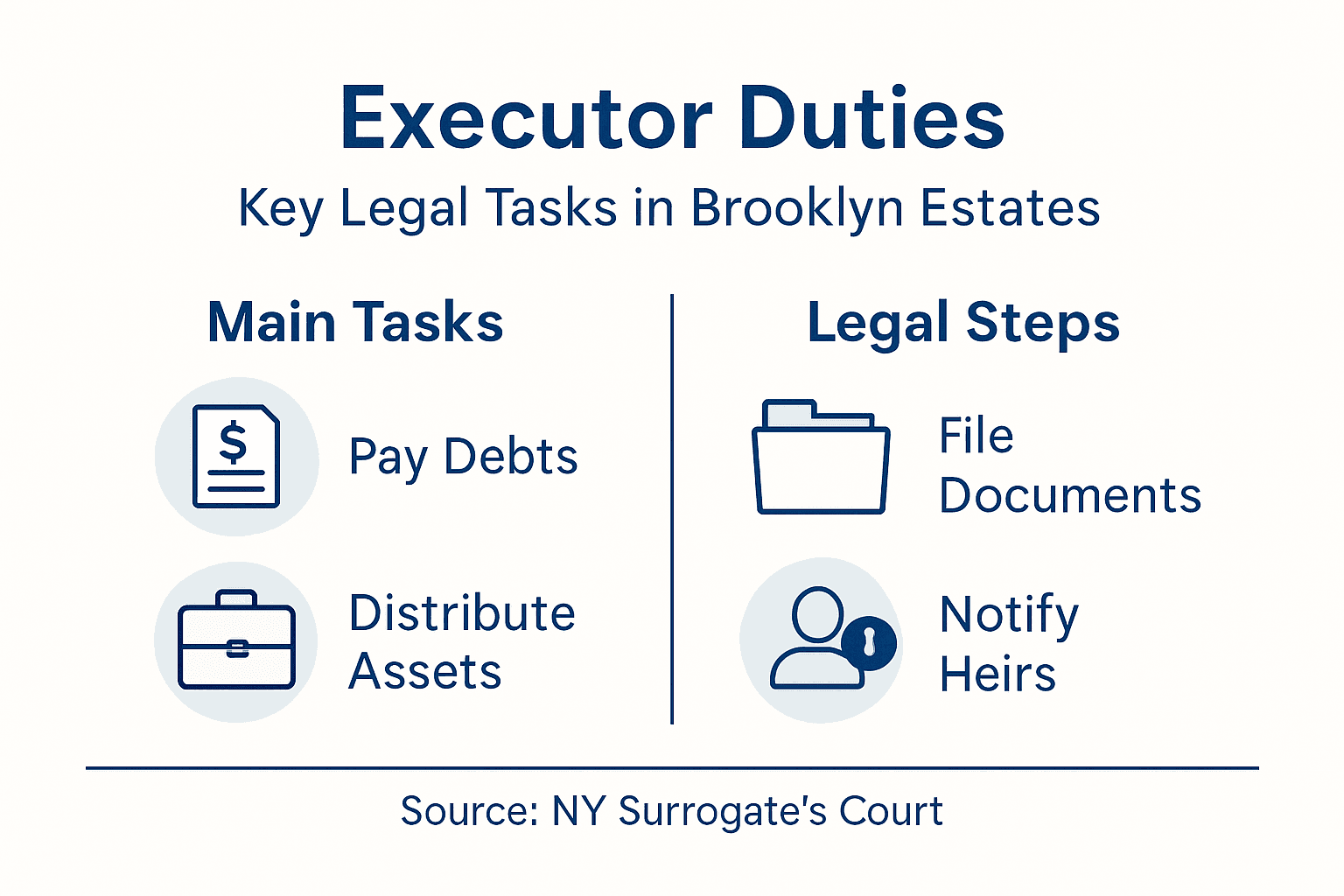
Primary Responsibilities of an executor encompass multiple critical tasks:
- Locate and File the Will
- Open Probate Proceedings
- Notify Beneficiaries and Creditors
- Inventory Estate Assets
- Pay Outstanding Debts and Taxes
- Distribute Remaining Assets
Legal executor duties require maintaining a high standard of fiduciary responsibility. This means:
- Managing assets prudently
- Maintaining accurate financial records
- Making decisions in the estate’s best interest
- Avoiding conflicts of personal and estate interests
- Protecting the value of estate assets
An executor acts as a legal guardian of the deceased’s final financial wishes.
Potential Challenges executors might encounter include:
These are common executor challenges and possible solutions:
| Challenge | Potential Consequence | Recommended Solution |
|---|---|---|
| Complex family relationships | Delayed asset distribution | Mediation services |
| Unlocated estate assets | Incomplete settlement | Professional asset search |
| Tax management difficulties | Unexpected tax penalties | Specialized tax guidance |
| Disputes among beneficiaries | Legal proceedings required | Clear documentation |
- Complex family dynamics
- Disputes among beneficiaries
- Difficulty locating all assets
- Managing international or complex financial holdings
- Navigating tax implications
Pro tip: Consider consulting an experienced estate planning attorney to help navigate the complex legal landscape and ensure you fulfill all executor responsibilities accurately.
Financial Issues: Taxes, Costs, and Common Risks
Estate settlement involves navigating complex financial landscapes that can significantly impact family wealth. Estate tax implications require careful planning and strategic understanding to minimize potential financial burdens.
Federal Estate Tax considerations are critical for larger estates:
- Current exemption threshold of $13.99 million
- Maximum tax rate of 40%
- Scheduled changes to exemption limits in 2026
- Different rules for married couples
- Potential impact on inheritance strategies
Common Financial Risks families might encounter during estate settlement include:
- Unexpected tax liabilities
- Creditor claims against the estate
- Complex asset valuation challenges
- Potential family disputes over asset distribution
- Long-term legal and administrative expenses
Estate settlement costs can quickly accumulate through various channels:
- Legal consultation fees
- Court filing expenses
- Asset appraisal costs
- Tax preparation charges
- Potential executor compensation
Proactive financial planning can significantly reduce potential estate settlement expenses.
Key Financial Strategies to minimize risks:
- Maintain comprehensive financial documentation
- Consider establishing trusts
- Regularly update estate planning documents
- Consult with tax and legal professionals
- Understand potential tax exemptions
Pro tip: Consult a professional estate planning attorney to develop a comprehensive strategy that addresses potential financial complexities and minimizes unexpected tax burdens.
Navigate Estate Settlement in Brooklyn with Trusted Legal Support
Estate settlement can feel overwhelming with the challenges of probate, asset management, and complex executor duties. If you face uncertainty about validating wills, managing probate versus non-probate assets, or handling potential tax risks, you are not alone. The key pain points are clear: ensuring a smooth transfer of assets, avoiding costly delays, and protecting your family’s legacy. Terms like “executor responsibilities” and “probate court procedures” highlight the importance of precise legal guidance during this sensitive time.
At Alatsas Law Firm, we specialize in helping Brooklyn families confidently work through every step of estate settlement. From clarifying probate requirements to structuring effective estate plans that minimize tax burdens and prevent disputes, our experienced team provides both compassion and expertise. Visit our main page to learn more about our estate planning and elder law services perfect for families preparing for the future. Don’t wait for complications to arise. Reach out now to schedule a consultation and secure peace of mind during difficult times.
Frequently Asked Questions
What is the process of estate settlement in Brooklyn?
Estate settlement in Brooklyn involves several key steps, including locating and validating the will, appointing an executor, managing and inventorying estate assets, paying outstanding debts, and distributing remaining assets according to the will or state law.
How does probate affect estate settlement in Brooklyn?
Probate is a court-supervised process that authenticates a will and ensures proper distribution of assets. It requires detailed documentation, and the assets that must go through probate typically include personal bank accounts, real estate, and individual investment accounts.
What are non-probate assets, and how do they differ from probate assets?
Non-probate assets bypass traditional court administration and include items like life insurance policies, retirement accounts with named beneficiaries, and property held in living trusts. In contrast, probate assets require court supervision for distribution.
What are the responsibilities of an executor in the estate settlement process?
The executor’s responsibilities include locating and filing the will, opening probate proceedings, notifying beneficiaries and creditors, inventorying estate assets, paying debts and taxes, and distributing remaining assets according to the will, all while maintaining accurate financial records.