If your family cannot find your private keys, your cryptocurrency might as well not exist. Including Cryptocurrency and NFTs in a New York Estate Plan is not about predicting markets, it is about making sure your spouse, kids, or chosen beneficiary can actually access what you own. I see this come up with Brooklyn small business owners who diversify into crypto, and with caregivers who discover a parent has a “Coinbase account” but no instructions.
This guide walks you through a practical framework: how digital assets are treated in New York, how to structure wills and trusts, what happens in probate, and how crypto can affect Medicaid planning.
Ready to turn your wallet list into a legally usable plan? Schedule a Free Consultation with Alatsas Law Firm.
Key Takeaways
- Access beats ownership on paper: Without a plan for keys and logins, heirs may never receive the crypto you intended.
- Including Cryptocurrency and NFTs in a New York Estate Plan requires two tracks: legal documents plus secure, updated instructions.
- Trusts can reduce probate friction: The right trustee powers and funding steps matter for digital assets.
- Medicaid planning needs careful timing: Crypto is an asset, and transfers can create eligibility penalties.
- Brooklyn families do best with a simple inventory: Wallets, exchanges, devices, and a backup process.
Understanding Cryptocurrency and NFTs in New York Estate Planning
Digital assets create a “visibility problem,” not just a legal problem. In cryptocurrency estate planning New York families often focus on volatility, but the bigger risk is that nobody knows where the asset is held or how to access it.
Cryptocurrency (like Bitcoin or Ethereum) is typically controlled by a private key. That key may be stored in a hardware wallet, a phone app, an exchange account, or even written on paper. NFTs (non-fungible tokens) are usually held in a blockchain wallet and tied to a specific token ID, sometimes with the image or metadata hosted elsewhere. The practical estate planning question is simple: who can locate the asset, prove you owned it, and take control after death or incapacity?
Why New York planning feels different
New York is both tech-forward and compliance-heavy. Many New Yorkers use regulated exchanges, and some run into BitLicense related limits on platforms operating in the state. If you have ever wondered “Why is crypto not allowed in NY?”, the more accurate answer is crypto is permitted, but many companies choose not to operate here due to regulation. The New York Department of Financial Services explains the framework for virtual currency businesses here: NYDFS virtual currency guidance.
A common Brooklyn scenario is a business owner in Williamsburg holding a mix of exchange-based assets and a cold wallet, while also having family members who have never used a crypto app. That gap, not the asset class itself, is what breaks estates.
For families already organizing valuables and keepsakes, it helps to treat crypto and NFTs like any other high-value item, with added access steps. The mindset is similar to organizing “what matters” before a crisis, which we discuss in Memory Makers: Your Personal Possessions.

Structuring Trusts and Wills to Include Cryptocurrency and NFTs in New York
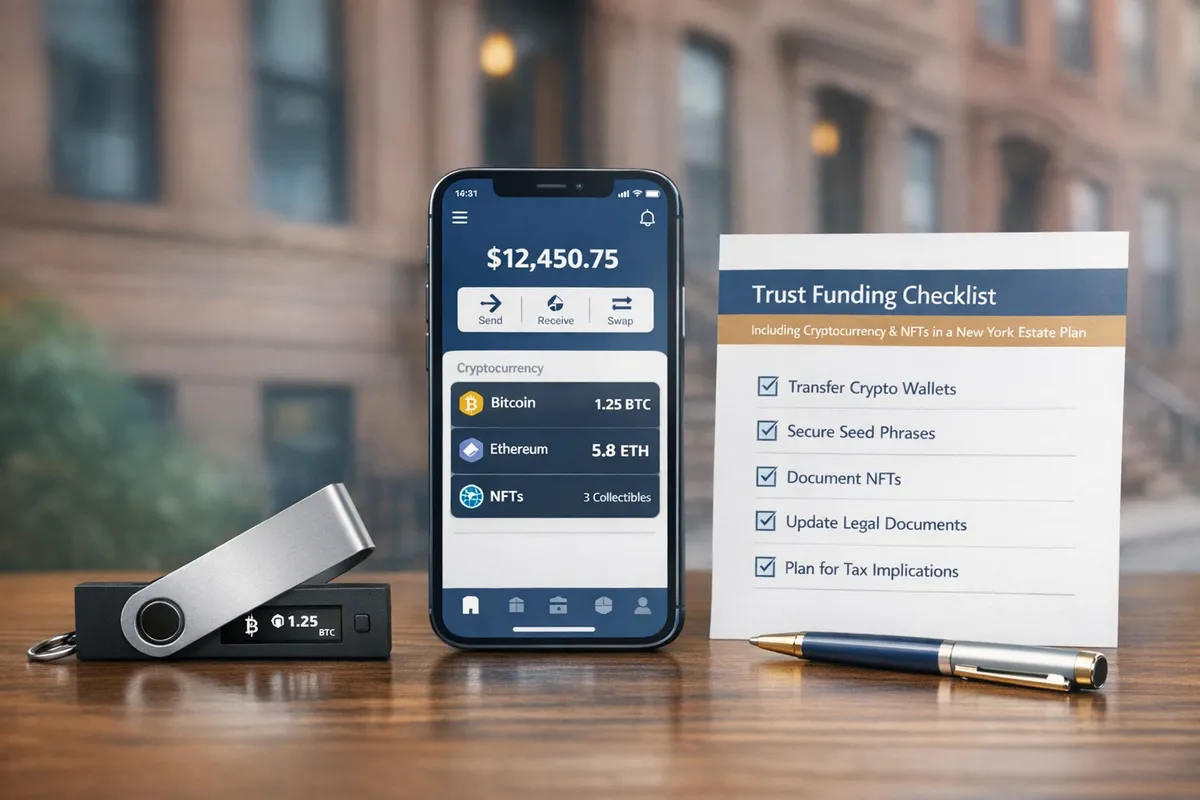
A will can say who inherits, but a trust and proper instructions often determine whether they can access it. Including Cryptocurrency and NFTs in a New York Estate Plan usually works best when you separate (1) the legal transfer authority from (2) the secure access method.
If you only list “my Bitcoin” in a will, your executor may still struggle to find it, value it, or move it without exposing keys. If you only leave keys, you may create theft risk, family conflict, or accidental loss. The goal is to build a clear chain of authority and a safe chain of access.
A practical framework: documents, people, and information
Here is a step-by-step way many families implement NFTs in wills and trusts NY, without turning the plan into a tech project:
- Create a digital asset inventory that names exchanges, wallets, hardware devices, and NFTs collections, plus where supporting information is stored.
- Name the right fiduciary (executor, trustee, or agent under power of attorney) who is comfortable following procedures and asking for professional help.
- Add digital asset powers in your estate planning documents so your fiduciary can lawfully access, manage, and transfer digital assets.
- Set up a secure access method such as a password manager with emergency access, or a written key location system stored in a safe deposit box or home safe.
- Update regularly after major trades, new wallets, or new marketplaces.
In our experience, step 3 is where DIY plans fall apart. People assume their executor automatically has authority to log in, but platforms often require proof and may freeze accounts. A well-drafted plan anticipates verification requests and authorizes the fiduciary to work with exchanges, accountants, and valuation professionals.
Trust choices that work for many Brooklyn families
For many clients, a revocable living trust is a strong base because it can reduce probate friction and provides continuity if you become incapacitated. If you are still deciding whether a trust fits your situation, this plain-English Q and A is a helpful starting point: When should a family consider a trust as part of an estate plan, and what type of trust should they use?.
For asset protection goals, some families explore irrevocable trust planning, but the right structure depends on creditor risk, business exposure, and Medicaid timelines. If your home is part of that conversation, see Should I put my primary residence in an irrevocable trust?.
A key point for digital asset trust structuring Brooklyn clients often miss is “funding.” A trust only controls what you actually put into it. That may mean retitling an exchange account where possible, setting a transfer-on-death feature if the platform allows it, or documenting how the trustee can take control of a wallet.
Navigating Probate and Asset Protection for Cryptocurrency in New York
Crypto can go through probate, but it does not have to. The answer depends on how the asset is held and whether there is a trust or beneficiary mechanism that controls it.
If cryptocurrency is owned in an individual name with no trust and no payable-on-death style designation, it can become part of the probate estate. That means the Surrogate’s Court process, executor authority, notices, and delays. New York’s court system overview for Surrogate’s Court is here: New York Courts, Surrogate’s Court.
When families ask “Does cryptocurrency go through probate?”, I usually translate it into two practical questions:
- Can anyone identify the asset? If no one knows the wallet exists, it may never be administered, even if it is legally part of the estate.
- Can the executor access it without risking loss? If the only seed phrase is on the decedent’s phone and the phone is locked, the asset may be stuck.
Asset protection concerns unique to digital assets
For Brooklyn entrepreneurs, the fear is not just probate, it is liability. If you are a small business owner with personal crypto holdings and a business that could be sued, you want to discuss how titles, LLCs, insurance, and trust planning fit together. Keeping personal and business risk separated is often more important than chasing complex crypto “hacks.”
A common scenario is a contractor in Bay Ridge who keeps operating cash in the business account but builds long-term savings in crypto. The plan might involve a trust for family protection, clear succession instructions, and a plan for who can manage assets if the owner is temporarily incapacitated.
For families already dealing with a loved one’s declining health, probate delays can add emotional stress. Caregivers often benefit from broader support and planning habits, including practical communication strategies, like those discussed in 10 Strategies to Thriving as a Caregiver.
The transition to the next step is critical: if long-term care planning is on the horizon, you also need to understand how crypto is treated for Medicaid.
Including Cryptocurrency and NFTs in Medicaid Planning in New York
Including crypto in Medicaid planning NY requires careful documentation and timing. Medicaid is needs-based, and cryptocurrency is generally treated as an available resource if you can access it.
If a parent in Gravesend holds $40,000 in an exchange account, Medicaid will not ignore it just because it is “digital.” You may need statements, transaction histories, and valuations. The volatility can complicate planning, but the real issue is proving what exists and explaining transfers.
When families consider moving assets to qualify for Medicaid, they must respect the lookback rules and potential penalty periods. A transfer of crypto to a child or to an irrevocable trust can be treated like any other transfer for less than fair market value. The safest plan is proactive, not reactive, and it fits into a broader understanding of benefits. For a plain-English overview, start with What Medicaid Does (and Doesn’t) Cover in New York.
If a crisis hits and you are trying to stabilize finances quickly, it also helps to know that certain Medicaid benefits can be retroactive in limited situations, which we explain here: Using Retroactive Medicaid Benefits to Prevent Financial Disaster.

Real-World Case Studies: Successful Integration of Digital Assets in Brooklyn Estate Plans
The best digital asset plans are boring on purpose. The goal is not to impress anyone with tech knowledge, it is to make transfer predictable for real people who are grieving, busy, or overwhelmed.
Case study 1: The Sheepshead Bay business owner with “two wallets and no map”
A small business owner came in with a revocable trust, but his cryptocurrency was scattered: one exchange account, one hardware wallet, and an NFT collection in a hot wallet. His spouse knew crypto existed but had no access process.
We built a clean inventory, updated trustee and agent powers, and created a secure “where-to-find-what” instruction set that did not disclose seed phrases in the estate plan itself. We also discussed liability exposure and who would manage assets if he was hospitalized. The result was a plan that could be administered without guessing and without placing private keys inside public-facing probate filings.
Case study 2: The caregiver in Midwood facing long-term care timing
An adult child caregiver discovered a parent had purchased cryptocurrency years earlier and occasionally moved funds between wallets. The family’s immediate concern was nursing home costs, but they also feared “messing up Medicaid.”
We focused first on documentation: exchange histories, wallet addresses, and a timeline of transfers. Then we evaluated options to align the plan with long-term care goals. The family left with a clear next-step checklist and a realistic view of what transfers could trigger penalties.
Case study 3: Divorcing parent, NFTs, and the “who owns it?” question
In divorce, digital assets can become a flashpoint. One Brooklyn parent held valuable NFTs minted during the marriage, plus crypto used for household expenses. The estate plan needed to be updated as the separation progressed, so beneficiary designations and trustee choices stayed aligned with the new reality.
The biggest lesson across these matters is that Including Cryptocurrency and NFTs in a New York Estate Plan works best when it is integrated with life events. The IRS treats virtual currency as property for federal tax purposes, so accurate records matter for basis and reporting; see the IRS overview here: IRS guidance on virtual currencies.
Want a simple inventory template and a plan that fits your family? Start Your Journey with Alatsas Law Firm.
Frequently Asked Questions About Including Cryptocurrency and NFTs in a New York Estate Plan
Does cryptocurrency go through probate?
Yes, cryptocurrency can go through probate if it is owned in your individual name and there is no trust or beneficiary mechanism controlling it. Even then, probate is only part of the challenge because the executor also needs a reliable way to locate wallets and access accounts. Many families reduce probate friction by using a properly funded trust plus clear, secure access instructions.
What is the 5 by 5 rule in estate planning?
The 5 by 5 rule is a common trust provision that limits a beneficiary’s ability to withdraw the greater of $5,000 or 5% of trust assets each year. It is often used to balance access and tax planning in certain trust designs. It is not crypto-specific, but it can apply if a trust holds digital assets and you want controlled withdrawals rather than unrestricted access.
Why is crypto not allowed in NY?
Crypto is allowed in New York, but it is heavily regulated. Some exchanges and crypto businesses do not serve New York residents because they do not meet or pursue New York’s regulatory requirements. For estate planning, this matters because platform availability, account verification, and compliance steps can affect how quickly a fiduciary can gather information and transfer assets.
Your Next Steps for Protecting Digital Assets in New York
Including Cryptocurrency and NFTs in a New York Estate Plan is completely doable when you plan for access, authority, and timing. The families who get the best results keep it practical: an updated inventory, the right fiduciaries, and documents that give clear legal power without exposing secrets.
If you are a Brooklyn business owner worried about liability, or a caregiver trying to protect a parent’s future care, the right plan can reduce probate delays and prevent unnecessary loss.
When you are ready, Alatsas Law Firm can help you build a coordinated wills, trusts, and Medicaid strategy that treats digital assets like the real property they are, and protects your family the way you intended.