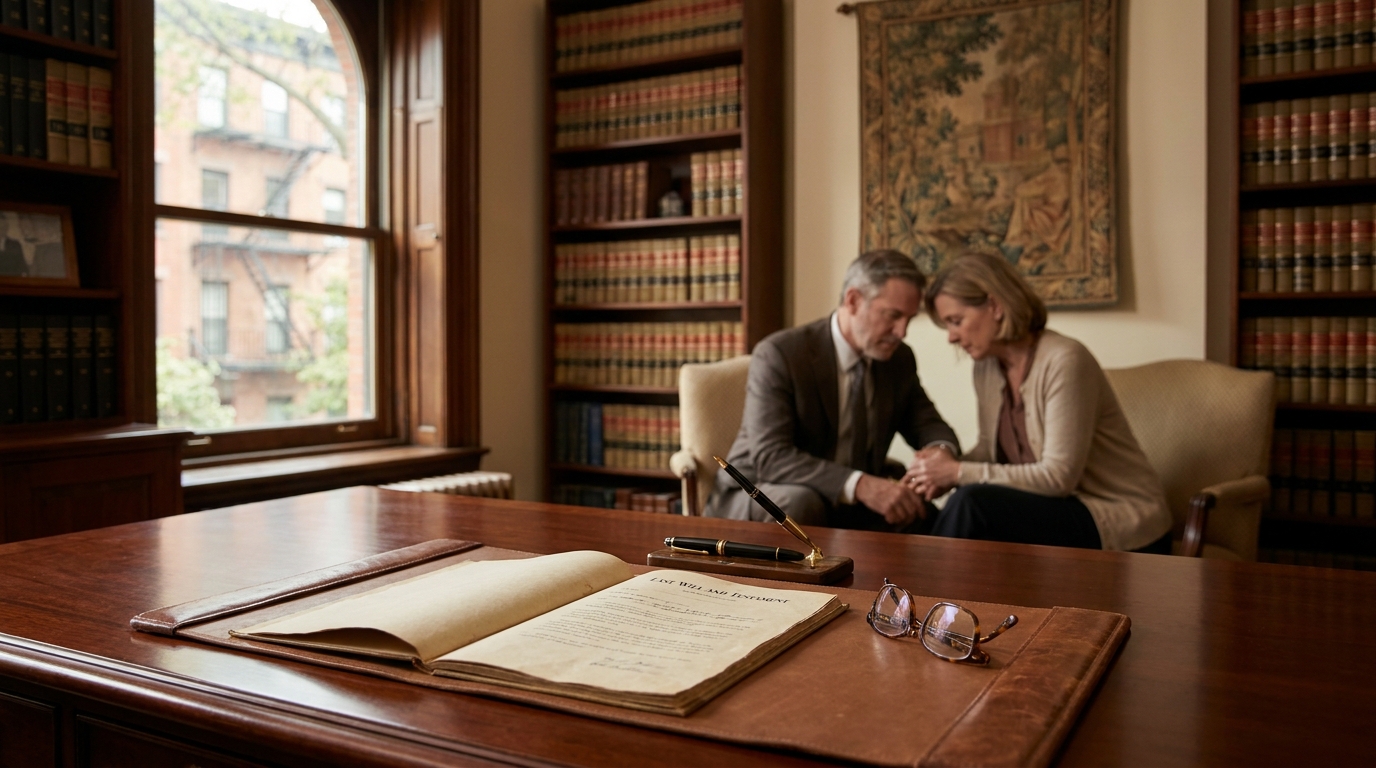
Grief is hard enough on its own. When a loved one passes away and the will doesn't look right — maybe it cuts out a child who was always close, or the signature seems off, or the document appeared out of nowhere after a new "friend" entered the picture — the hurt and confusion can become overwhelming. Challenging a will isn't something most people ever plan to do, but sometimes it's the only way to honor what you know was your loved one's true intention.
This guide walks you through the legal process of contesting a will in plain language, with a focus on what New York families specifically need to know.
Who can actually contest a will?
Not everyone who's unhappy with a will's contents has the right to challenge it. Courts require what's called legal standing — meaning you have a direct financial stake in the outcome.
Generally, you have standing if you are:
-
A beneficiary named in the current will or a prior version of it
-
An heir-at-law — someone who would inherit under New York's intestacy laws if the will were thrown out (typically a spouse, child, or sibling)
-
A creditor of the estate in some limited situations
If the will being contested is the only thing standing between you and an inheritance you'd otherwise receive, you likely have standing. But standing alone isn't enough. You also need a legally valid reason to contest.
Valid grounds for contesting a will
Courts don't overturn wills simply because someone is unhappy with how assets were divided. You need to prove one of the following:
Lack of testamentary capacity. The person who made the will (called the testator) must have been of sound mind — they need to have understood what property they owned, who their natural heirs were, and what signing the will meant. Dementia, severe illness, or other cognitive impairment at the time of signing can be grounds for a challenge.
Undue influence. This is one of the most common grounds. It means someone pressured, manipulated, or coerced the testator into changing the will in their favor. A caretaker who isolates an elderly person from family and then ends up inheriting everything is a classic red flag.
Fraud or forgery. If the testator was tricked into signing a document they didn't understand, or if the signature was forged outright, the will can be challenged.
Improper execution. New York law requires a will to be signed in front of at least two witnesses, who must also sign the document. If those formalities weren't followed, the will may be invalid.
Revocation. A later, valid will may already exist that supersedes the one being submitted to probate.
The step-by-step process
Step 1: Act quickly — deadlines matter
In New York, contesting a will happens in the Surrogate's Court in the county where the deceased resided. Unlike many other states with fixed deadlines of three to six months, New York's rules are more nuanced. A challenge based on fraud or forgery must generally be filed within two years of the will being admitted to probate, or six years from the date of death, whichever is later (under EPTL § 1410).
That said, if you receive a citation notifying you of a probate hearing and you don't show up to object, you may lose your right to contest entirely. Don't sit on it.
One option available in New York that's worth knowing about: you can file a caveat with the Surrogate's Court before the will is admitted to probate. This effectively pauses the process while your objection is reviewed.
Step 2: Consult an estate attorney
Before filing anything, get legal advice. Will contests are expensive, emotionally exhausting, and often take six months to two years to resolve, according to LegalZoom's 2026 overview of the process. An experienced attorney can honestly assess whether your grounds are solid and whether the potential outcome justifies the fight.
Step 3: Gather evidence
The strength of your case depends on the evidence you can put together. Depending on your grounds, that might include:
-
Medical records showing cognitive decline at the time the will was signed
-
Testimony from doctors, caregivers, or family members
-
Handwriting analysis if forgery is suspected
-
Financial records showing suspicious changes around the time the will was altered
-
Prior versions of the will
Step 4: File a petition in Surrogate's Court
Once you're ready, your attorney will file a formal objection or petition in the Surrogate's Court. All interested parties — other beneficiaries, the executor, anyone with a stake in the estate — must be notified.
Step 5: Discovery and possible mediation
After filing, both sides exchange evidence in the discovery phase. Many will contests settle before reaching a full trial. Mediation is often faster and far less costly for everyone involved. If mediation fails, the case proceeds to a judge.
Step 6: Trial
At trial, both sides present their evidence and arguments. The judge (not a jury, in most New York estate matters) decides whether the will stands or is invalidated. If the will is thrown out, the estate is either distributed under a prior valid will or, if none exists, under New York's intestacy laws.
What happens if you win — or lose?
If the court rules in your favor, the disputed will is declared invalid. Assets then pass either to the beneficiaries of a prior will or to legal heirs. If you lose, the original will stands.
One thing to check before filing: whether the will contains a no-contest clause (also called an in terrorem clause). In New York, these clauses can disinherit anyone who challenges the will and loses — though courts won't enforce them if you had probable cause to bring the challenge.
The best way to protect a will from being contested
All of this points to something important: will contests are painful, expensive, and often preventable. A well-drafted estate plan — created with professional guidance, properly witnessed, and regularly updated — is far harder to challenge successfully.
At Alatsas Law Firm, we've helped Brooklyn families build estate plans designed to hold up. With nearly 30 years of experience in estate planning and trust administration, attorney Ted Alatsas understands how family dynamics, cultural expectations, and personal circumstances all affect what a solid plan needs to include. The goal is to make your intentions clear, legally sound, and difficult to dispute after you're gone.
If you're on the other side of this — you've inherited a situation where someone's will doesn't look right — an experienced estate attorney can help you figure out whether you have a case worth pursuing and what the realistic road ahead looks like.
Either way, don't navigate it alone. These situations move fast, the stakes are high, and the decisions made early in the process can define the outcome. Reach out to discuss your situation — no pressure, just a conversation.