When a medical crisis hits, “we’ll figure it out” turns into panic fast. How do I create a health care proxy in New York? In most cases, you create one by choosing a trusted health care agent, completing the New York health care proxy form, and signing it in front of two adult witnesses.
In our Brooklyn workshops, I see the same pattern with caregivers, young professionals, and business owners alike: they assume a proxy is “standard,” then discover New York has its own execution rules and common traps.
In this practical, meeting-style walkthrough, you’ll learn the legal requirements, how to fill out a health care proxy in NY (with annotated examples), and how to make sure hospitals actually follow it.
Ready to get this done the way we do it in our workshops? Schedule a Free Consultation to build a clear, legally compliant plan.
Key Takeaways
- Two witnesses, not a notary: New York generally requires two adult witnesses, and your agent cannot be one.
- Use the right document: Start with the New York State health care proxy form so providers recognize it quickly.
- How do I create a health care proxy in New York? Choose an agent, complete the form, sign with witnesses, then distribute copies.
- Add guidance where it matters: A few sentences about “tubes and CPR” can prevent family conflict later.
- Enforcement is a process: Copies in the right hands beat a perfect form hidden in a drawer.
Understanding the Importance of a Health Care Proxy in New York
A New York Health Care Proxy is about control, not paperwork. It is the document that appoints a person (your “agent”) to make health care decisions if you cannot.
A common scenario is a middle-income family caregiver in Midwood rushing a parent to the ER after a fall. The adult child is ready to help, but the hospital asks, “Who is legally authorized to consent?” Without a proxy, families can end up in delays, disagreements, and, in some cases, court involvement.
New York is also very specific about who has authority. Providers often listen to family for context, but your chosen agent is the person who can speak with legal force when you lack capacity. That is why “I told my sister what I want” is not a plan.
Why this matters for Brooklyn business owners, too
If you run a business, a health event becomes a business continuity problem. If you are incapacitated, your spouse or adult child may be managing hospital decisions while also trying to keep payroll moving. Your health care proxy is not a financial power of attorney, but it reduces chaos at the exact moment your family needs bandwidth.
If you are also planning broader protection, this is the same planning mindset we talk about in Know Your Parents’ Aging Strategies Before a Medical Crisis Hits: take action while you still have options.

New York Health Care Proxy Requirements: Legal Essentials You Must Know
New York rules are simple, but they are not “whatever the internet says.” If you are asking, “How do I create a health care proxy in New York?” the safest answer is: follow New York’s witness requirements and use a recognizable form.
Here are the core health care proxy requirements New York residents should know:
- You must have capacity when you sign. In plain English, you need to understand what you are signing and what it does.
- You generally must be 18 or older to sign. Some limited exceptions exist (for example, certain minors who are married or who have a child), but most people should assume 18+.
- You must sign in front of two adult witnesses. Your agent and alternate agent cannot be witnesses. This is a frequent Brooklyn “kitchen table” mistake.
- Notarization is typically not required. Many people spend money on a notary thinking it makes the form “stronger,” but the law focuses on proper witnessing.
You can read a plain-English overview from the New York State Attorney General here: Health Care Proxy overview (NY AG).
The “one-size-fits-all” myth that causes real damage
A health care proxy is not identical across states. We regularly see new New Yorkers bring in a proxy signed elsewhere that is missing New York’s expected execution format or witness language. It may still be usable, but in an emergency, anything “unfamiliar” can slow staff down.
If you want a commonly accepted New York form, many families start with this Department of Health version: New York health care proxy form PDF.

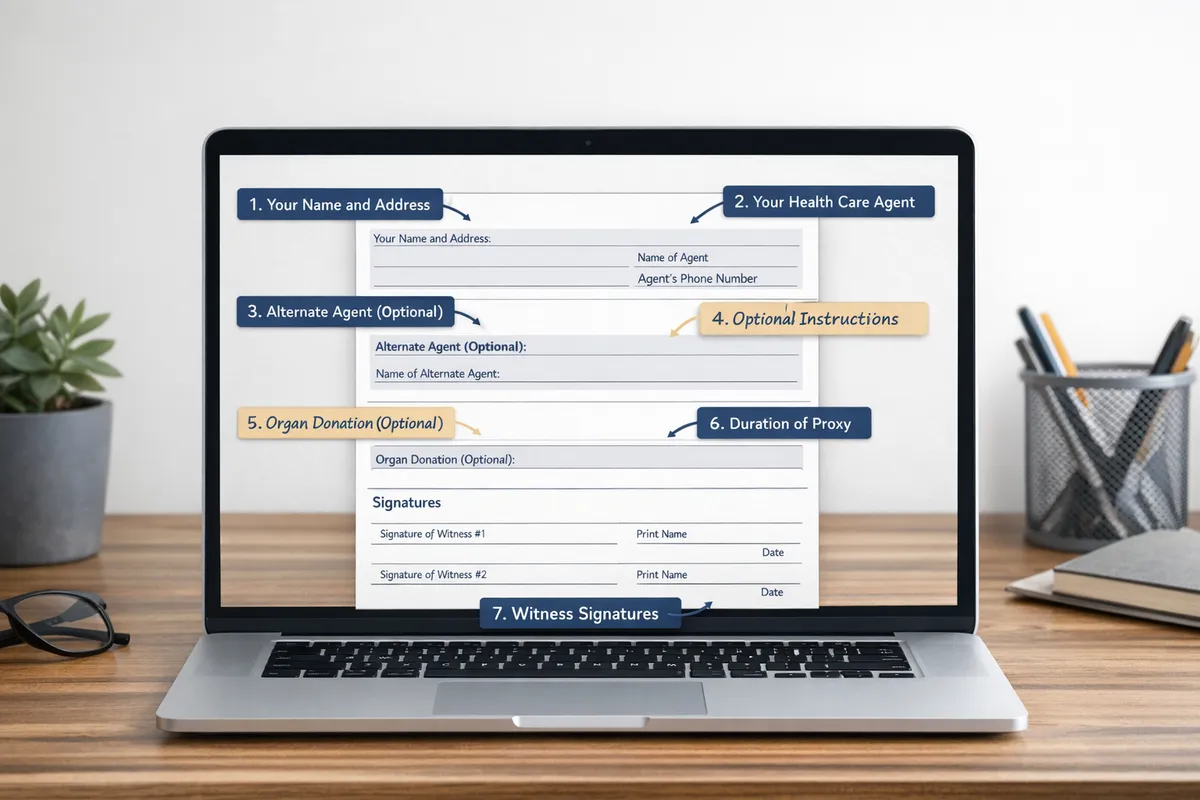
How to Fill Out a Health Care Proxy in NY: Step-by-Step Walkthrough with Form Annotations
This is the workshop part: we fill the form out the way a hospital will read it. How do I create a health care proxy in New York? You do it by completing the New York health care proxy form accurately, then executing it with witnesses.
Below is a step-by-step guide to how to fill out a health care proxy in NY, using the common “1430” style form.
Step 1: Section (1), appoint your primary health care agent
Write legibly and give full contact info. In practice, incomplete addresses and missing phone numbers are what derail families at 2:00 a.m.
Annotated example (what a completed line might look like):
- “I, Jordan Rivera, hereby appoint Casey Rivera, 123 Ocean Pkwy, Brooklyn, NY 11218, (718) 555-0142 as my health care agent…”
Why it matters: staff need to reach your agent quickly, and you want zero doubt about identity.
Step 2: Section (2), name an alternate agent (optional, but strongly recommended)
Your alternate is the “if primary cannot be reached” safety net. In Brooklyn, I see alternates used constantly when a spouse is traveling, when siblings disagree, or when the primary agent freezes under pressure.
Workshop tip: Pick an alternate who will actually answer the phone and show up.
Step 3: Section (3), decide whether it should expire
Most people should leave this blank so it remains effective indefinitely. Expiration dates create accidental “dead documents,” especially for young professionals who sign it once and never revisit it.
A better approach is to update when life changes, similar to what we recommend in Coming of Age and Powers of Attorney when a child turns 18 and suddenly parents lose automatic access.
Step 4: Section (4), add medical instructions that reduce conflict
A few sentences here can save your family from a fight later. This is where you can guide decisions about CPR, ventilators, dialysis, and especially artificial nutrition and hydration (feeding tubes and IV fluids).
Sample language (short, realistic, and usable):
- “If I am in a coma with no reasonable hope of recovery, I do not want long-term life support. I want comfort-focused care.”
- “My agent may decide about artificial nutrition and hydration based on what my doctors recommend and my stated wishes.”
This section is also where Brooklyn families often add religious considerations or “I want my agent to consult Dr. Patel” type guidance.
Step 5: Section (5), identification and your signature (do not sign early)
Sign only when both witnesses are present and watching. If you sign at home alone, then bring it to two friends later, you just created an avoidable validity challenge.
Step 6: Section (7), witness statements and signatures
You need two adult witnesses, and they must sign. Your agent cannot be a witness, and your alternate cannot be a witness.
Common mistake we correct in meetings: A spouse is appointed as agent, then “witnesses” the document out of habit. That defeats the point.
For step-by-step instructions that track the form, see: Health care proxy instructions PDF.
Appointing a Health Care Agent in NY: Choosing the Right Person for Your Proxy
The “right” agent is the person who will act, not just the person you love most. Appointing a health care agent in NY means giving someone the authority to make real-time medical decisions when emotions are high.
Choose someone who is:
- Calm under pressure, especially in ER settings.
- Able to communicate clearly with doctors and nurses.
- Willing to follow your wishes, even if they personally disagree.
A common Brooklyn example is an adult child who is an excellent caregiver day-to-day, but cannot handle conflict with siblings. In that case, we often recommend appointing a steadier sibling as agent, and giving the hands-on caregiver a support role.
If family dynamics are complicated, this is also a good time to read 10 Strategies to Thriving as a Caregiver because burnout and guilt can quietly distort decision-making.
Legal Steps and Best Practices for Enforcing Your New York Health Care Proxy
Execution is only half the job; distribution is what makes it real. How do I create a health care proxy in New York that actually works in a crisis? You make it easy for providers to find it and trust it.
Here are practical legal steps for health care proxy New York families should follow after signing:
Make “duplicate originals,” not just photocopies
Sign multiple originals with witnesses if your family tends to misplace documents. Many people keep one original and make copies; that is fine, but duplicates can reduce arguments about “is this the latest version?”
Give it to the people and places that matter
A proxy in a drawer is not protection. We recommend distributing copies to:
- Your primary agent and alternate
- Your primary care doctor and specialists
- A trusted family member who can find it quickly
If you have an upcoming procedure, bring a copy to pre-op. If you are admitted to a hospital, ask that it be scanned into your chart.
Keep it out of a safe deposit box
If no one can access the document, it may as well not exist. Use a home file system that your agent knows, or a secure digital vault.
Coordinate with your other planning documents
A health care proxy pairs naturally with a power of attorney and, sometimes, a trust-based plan. If your bigger concern is protecting a home or business assets, the proxy is one piece of the “incapacity plan.” For the broader estate planning question, see When should a family consider a trust as part of an estate plan, and what type of trust should they use?.
Know what happens if you have no proxy
If you do not sign a proxy, New York may rely on default surrogate decision rules in certain settings, and disputes can still push families toward court. The safest path is to decide in advance who speaks for you.
You can also see New York’s Health Care Proxy law framework in Public Health Law Article 29-C here: NY Public Health Law Article 29-C (NY Senate).
Want the same “Signing Meeting” structure we use with Brooklyn families? Start Your Journey and we will help you line up your health care proxy with the rest of your plan.

Frequently Asked Questions About Creating a Health Care Proxy in New York
How much does a lawyer charge for a health care proxy?
Many New Yorkers can complete a health care proxy at low cost or even no cost, especially if they use a standard New York health care proxy form and follow the witness rules. Attorney fees vary widely based on whether the proxy is part of a larger estate plan, whether there are complex family dynamics, and whether you are adding related documents like a power of attorney, wills, or trusts.
Who makes decisions if you have no health care proxy in NY?
If you have no health care proxy, your loved ones may not have clear legal authority to decide, and providers may rely on default surrogate decision-making rules in certain situations. In real life, that can still lead to delays, conflict among relatives, or the need for court involvement if there is disagreement. A properly signed proxy is the simplest way to name the decision-maker you trust.
Your Next Steps: Turning a Form Into Real Protection
A New York health care proxy is only “done” when it is signed correctly and shared intelligently. How do I create a health care proxy in New York? Choose a responsible agent, complete the New York health care proxy form with clear instructions, sign with two adult witnesses, then put copies where doctors and your agent can actually access them.
If your family is also navigating aging, Medicaid planning, or long-term care concerns, this document should fit into a bigger plan, not sit alone.
If you want help building a legally compliant plan that matches your values and your Brooklyn reality, the next step is a guided conversation and a clear signing process.