Your mind races at 3 a.m. You want the marriage to end, but you don't know where to start. This guide explains how to file for divorce in New York, what papers you need, how service works, and when legal help can protect your home, money, and time.
The official fee schedules published by county clerks for Manhattan, Brooklyn, Queens, the Bronx, and Staten Island. Each lists the same $210 charge for an index number, the fee that opens a divorce case. Queens, the Bronx, and Staten Island also charge an identical $95 Request for Judicial Intervention fee. Kings County adds $8 for every certified copy of the judgment, showing the index number fee is only part of the required cost.
Step 1: Confirm You Meet New York's Divorce Requirements
Before learning how to file for divorce in New York, check that the state has the legal authority to hear your case. This is called jurisdiction. If you file in the wrong state or county, the case may stall before the judge reviews the marriage issues.
Check the residency rule
New York law has several ways to meet the residency requirement. The most common path is that either spouse has lived in New York continuously for at least two years before filing. The complete guide to divorce and separation for New Yorkers explains the residency paths and other requirements in more detail.
A shorter period may apply in some cases. For example, one spouse may have lived in New York for at least one year when the couple married in New York or lived here as a married couple. Another route may apply when both spouses live in New York and the reason for the divorce happened here.
Write down the dates and addresses that support your claim. Gather lease records, tax records, voter records, or other papers that show where you lived. You may not need every document at filing, but having them ready can help if residency becomes an issue.
Choose your legal ground
New York requires a legal ground, or recognized reason, for divorce. The most common ground is no-fault divorce based on an irretrievable breakdown of the relationship for at least six months. You don't have to prove that your spouse cheated or did something wrong to use this ground.
Other grounds include cruel and inhuman treatment, abandonment, imprisonment, adultery, and divorce after a period of legal separation. Fault-based grounds can require proof. That may affect the documents you need and the issues your spouse chooses to fight.
Read the firm’s plain-language explanation of the grounds for divorce in New York before choosing one. The right ground depends on your facts, not on which option sounds easiest.
Pick the right county
Divorce cases are filed in the appropriate New York state court, usually in a county connected to one spouse's residence. County rules can affect where you submit papers and how the clerk accepts them. If you live in Brooklyn, Queens, or Staten Island, confirm the proper county before preparing a full filing packet.
Alatsas Law Firm works with families in those boroughs and can review the basic facts before you file. That early review can catch a residency problem before you spend money on filing fees.
Step 2: Decide Whether Your Divorce Is Uncontested or Contested
To understand how to file for divorce in New York, first decide whether you and your spouse agree on every major issue. An uncontested divorce means both spouses agree to end the marriage and agree on the terms. A contested divorce means at least one important issue remains open.
What an uncontested divorce requires
An uncontested case may be possible when you and your spouse agree about:
- Division of marital property.
- Responsibility for marital debt.
- Child custody and parenting time.
- Child support.
- Spousal maintenance, if any.
- Health insurance and other required terms.
Silence isn't agreement. A couple may agree that they want a divorce but still disagree about a bank account, a pension, a child’s school, or who pays a credit card. Those details need clear terms in a written settlement agreement. Review the requirements for an uncontested divorce in New York before assuming your case qualifies.
When a case becomes contested
A divorce is contested when your spouse disputes the ground, refuses to sign, or disagrees about property, support, custody, or another term. The court process then may include conferences, financial disclosure, negotiation, mediation, motions, or trial preparation.
Contested doesn't always mean you will go to trial. Many cases settle after both sides exchange information. Still, you should treat a contested case as a legal dispute from the start. A rushed filing can affect your position on support or property.
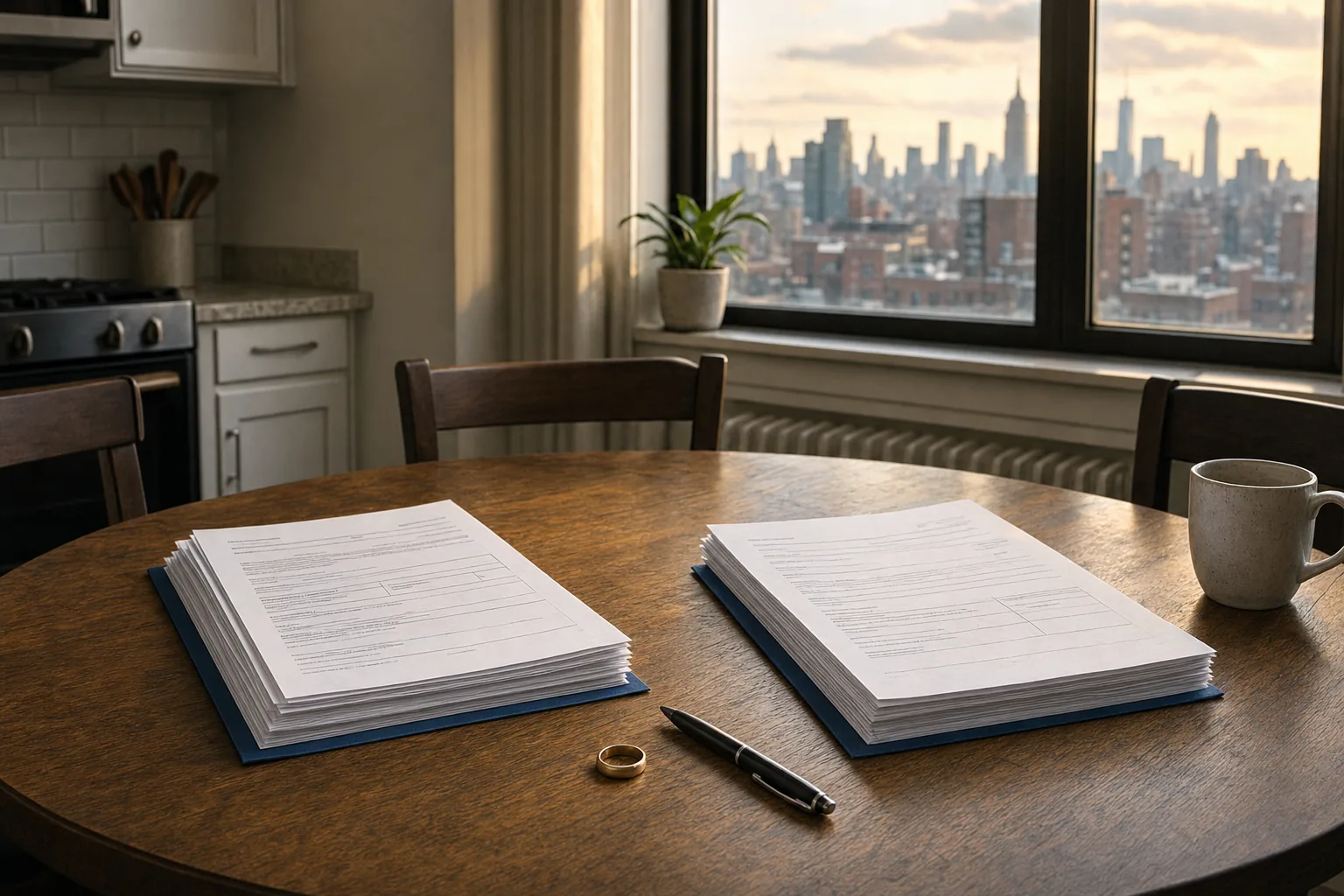
| Question | Likely uncontested | Likely contested |
|---|---|---|
| Do both spouses want the divorce? | Yes | One spouse may resist |
| Is there a written agreement? | Terms are settled | Terms remain open |
| Are finances easy to identify? | Both sides share records | Records may be missing or disputed |
| Are custody terms settled? | Parents agree on a plan | Parents disagree about care or time |
| Should you seek legal review? | Often wise before signing | Strongly consider representation |
Online services can cost less than a private law firm, but a form service cannot assess every legal risk in your family. Research collected for this article found paid options ranging from basic packages near $159 to much higher prices. The spread makes it important to ask what the fee includes.
Free legal help may also be available for people who meet income rules. Cost should guide your plan, but it shouldn't be the only test. The cheapest filing can become expensive if a missed term forces you to return to court.
Step 3: Gather Information and Complete the Divorce Forms
The next part of filing for divorce in New York is building a complete packet. Start with facts, not blank forms. Small errors in names, dates, addresses, or account details can lead to rejected papers or later disputes.
Collect your core records
Set up a private folder for the case. Include your marriage certificate if you have it. Add information about prior marriages, children, residences, income, debts, property, insurance, and retirement accounts.
You may need Social Security information for both spouses and the children. Keep copies of tax returns, pay records, bank statements, mortgage papers, loan statements, and business records. If a document contains sensitive information, store it securely and share it only through a safe channel.
Know the first papers
A divorce action usually begins with either a Summons with Notice or a Summons and Verified Complaint. The papers identify the spouses, state the legal ground, and tell the court what relief the filing spouse seeks. Learn how a spouse begins a divorce proceeding in New York before selecting the initiating papers.
Uncontested cases also need supporting forms. These may include an agreement, financial forms, child support documents, parenting terms, affidavits, and a proposed Judgment of Divorce. The exact packet depends on your facts and the county’s filing process.
Don't copy a form from an old case. Forms and court instructions can change. The guide to getting an uncontested divorce in New York explains the main documents and agreement issues to review.
Review every term before signing
Read the agreement as if you were living under it five years from now. Ask who pays a joint debt after the divorce. Check what happens if a parent moves. Review how tax claims, medical costs, college costs, and insurance will work.
Property can be hard to classify. An asset may have started as separate property but later mixed with marital funds. A home, pension, business interest, or inheritance deserves careful review before you sign away a claim.
We often tell clients to slow down at this stage. The goal isn't to fill every box quickly. The goal is to make sure the final judgment says what you and your spouse actually agreed to.
Step 4: File the Papers and Pay the New York Court Fees
Once your papers are complete, file them with the County Clerk in the proper New York county. Filing officially starts the case. The clerk assigns an index number, which identifies the case on later papers.
Prepare the filing packet
Make the number of copies the clerk requires. Bring the original papers and copies for stamping. Check every page for matching names, dates, and index-number space. Don't sign an affidavit before checking whether it must be signed before a notary.
The initial index-number fee varies and should be confirmed with the County Clerk. An uncontested case may also involve added filing charges. Other costs can include copying, postage, notarization, service, travel, and attorney fees. Confirm the current amount with the County Clerk before you go.
If paying the fee would cause hardship, ask the clerk about a fee waiver or poor-person application. Approval isn't automatic. You may need to provide financial information and wait for a decision.
File in person or through the accepted method
Some counties accept papers through specific electronic or mail procedures, while others may direct self-represented parties to file in person. Follow the instructions for your county. Keep a stamped copy of everything.
Don't serve an unstamped draft. Your spouse should receive the file-stamped papers that show the case has been opened. The index number must appear on later filings and should be kept with your case records.
Filing fees are only one part of the budget. A low filing cost doesn't mean the entire divorce will be low cost. A contested case can require repeated court appearances and financial review, while a simple uncontested case may have fewer paid steps.
Step 5: Properly Serve the Divorce Papers
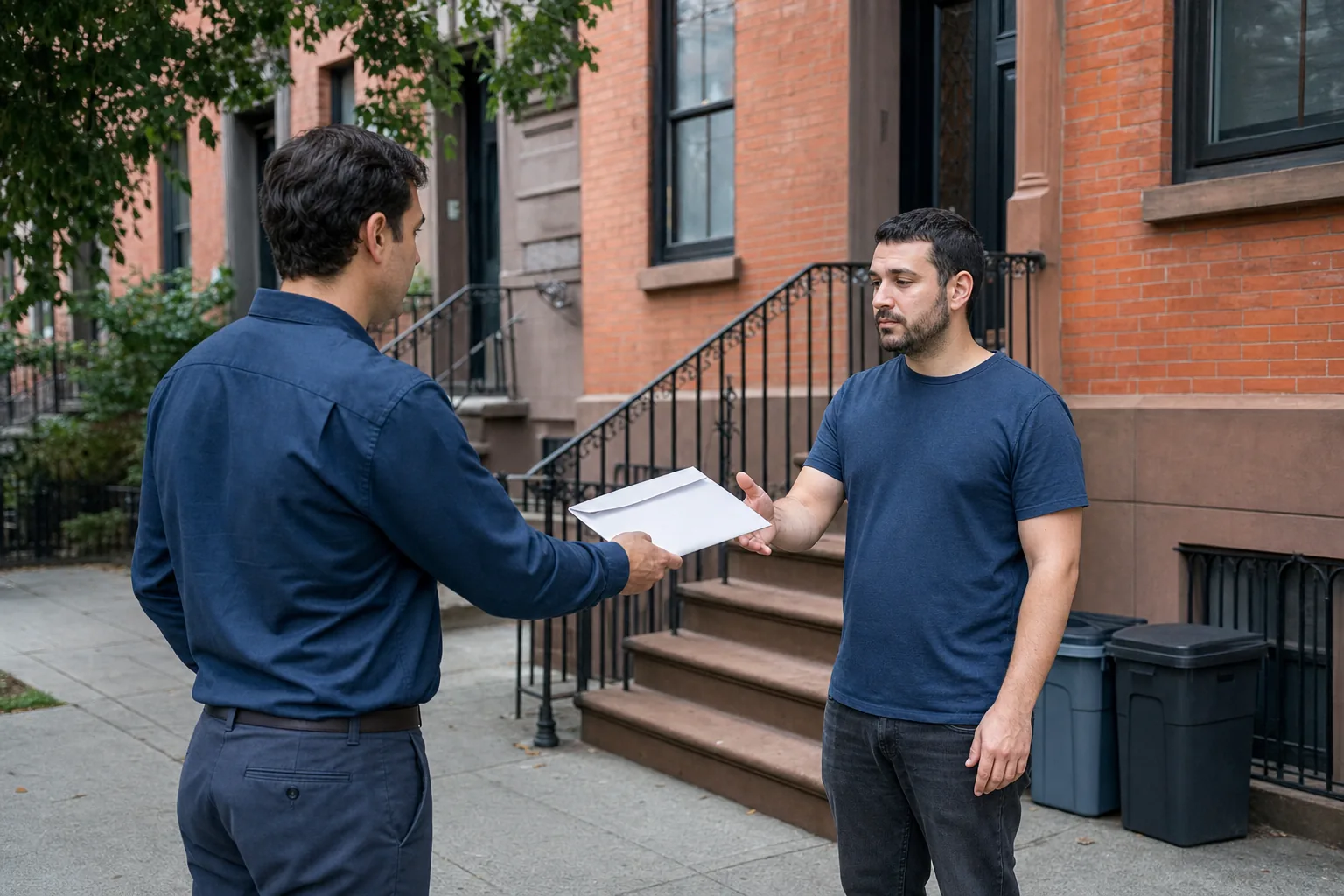
Service gives your spouse legal notice of the divorce case. New York generally requires personal service in a divorce action, meaning an authorized person delivers the papers directly to your spouse.
Choose an eligible server
You cannot serve the papers yourself. Find someone at least 18 years old who isn't a party to the case and is willing to deliver them. In some situations, a professional process server may be able to help.
New York City may also have local rules for professional process servers. If your spouse is hard to find, hostile, or likely to avoid service, using an experienced server can reduce the risk of a challenge. If hostility involves threats or abuse, review information about domestic violence and legal help in New York and consider safety planning before arranging contact.
Give the server the right documents
Give the server a file-stamped copy of the papers and a blank Affidavit of Service. The server must deliver the papers in the way required by law. Service cannot be completed on a Sunday.
After delivery, the server fills out the affidavit. It should state what papers were served, when and where service happened, and who received them. The server may need to sign before a notary. Ask the clerk whether notarization is required for your filing.
File proof of service
Get the completed Affidavit of Service back from the server. Make a copy for your records, then file the original with the County Clerk. Ask the clerk to stamp your copy.
Timing matters. Divorce papers generally must be served within 120 days after the initial filing. Your spouse's response time may be 20 days after personal service inside New York or 30 days in some other service situations. The exact deadline can depend on where and how service occurred.
If personal delivery fails, don't improvise. Other methods may require due diligence and court permission. A service mistake can delay the case or lead to a jurisdiction challenge.
Step 6: Complete the Court Process and Obtain the Judgment of Divorce
The final stage begins after service and the response period. Your next steps depend on whether the case is uncontested or contested. The marriage ends only when the judge signs and the clerk enters the Judgment of Divorce.
For an uncontested case
If your spouse agrees, finish the required affidavits and settlement papers. Submit the signed agreement with the remaining forms. The judge reviews whether the papers meet New York law and court rules.
The court may ask for corrected forms or more information. A missing signature, unclear custody term, or incorrect date can send the packet back. Check the clerk’s instructions before submission rather than guessing which documents belong in the final package.
Once the judge signs the Judgment of Divorce, obtain certified copies if you need them for a name change, insurance update, retirement plan, or other record. Store the judgment with the settlement agreement. The agreement explains the terms, while the judgment legally dissolves the marriage.
For a contested case
If your spouse answers or disputes the terms, the court may schedule conferences. Both sides may exchange financial information through a process called disclosure. That can include income records, bank statements, debt records, property information, and retirement data.
Child custody and support need careful attention. New York courts use legal rules and financial information when deciding support. The court may also consider the child’s needs and the parents’ circumstances.
New York uses equitable distribution for marital property. Equitable doesn't always mean an equal split. The court looks at the facts of the marriage and decides what division is fair under the law. Mixing separate funds with marital funds can make this analysis harder.
Negotiation or mediation may resolve some disputes. If no agreement is reached, the court may hear motions or hold a trial. Each side presents evidence, and the judge decides the open issues before entering a final judgment.
Update your broader plan
Divorce changes more than your court file. Review beneficiary choices, powers of attorney, health directives, wills, trusts, business documents, and insurance. If you have children or own a home, these updates deserve prompt attention.
Alatsas Law Firm helps families look at divorce alongside estate planning, elder law, and consumer bankruptcy concerns. That matters when a separation changes who manages money or who receives property. A usable guide for choosing the right estate plan can help you .
Our senior attorney, Peter Alatsas, and the firm team can review an uncontested case before filing or help assess a contested matter. We take the time to understand the family behind the paperwork. The aim is to protect everything you've worked so hard to build while helping you move toward daytime confidence.
Frequently Asked Questions About Filing for Divorce in New York
Can I file for divorce in New York without a lawyer?
Yes, you can file without a lawyer, but self-representation carries risk. You must choose the right forms, meet residency rules, serve your spouse correctly, and submit a complete final packet. A lawyer can review an uncontested agreement or help with disputed property, support, custody, or service problems.
How much does it cost to file for divorce in New York?
The basic court filing cost commonly starts with an index-number fee, but the full cost varies. You may also pay for copies, service, notarization, travel, and legal help. Ask the County Clerk about current fees and whether you qualify to request a fee waiver.
How long does a New York divorce take?
There is no single timeline for filing for divorce in New York. An uncontested case may move faster when both spouses sign complete papers, while a contested case can take much longer. Court workload, service problems, financial disputes, custody issues, and missing forms can all add time.
What happens if my spouse refuses to sign divorce papers?
Your spouse's refusal to sign doesn't always stop the divorce. You still must provide legal notice through proper service. If your spouse doesn't respond after valid service, you may be able to seek a default judgment. If your spouse answers or raises disputes, the case becomes contested.
Do I have to serve my spouse in person?
Personal service is the usual requirement for New York divorce papers. Someone at least 18 years old who isn't part of the case must deliver the papers. If your spouse cannot be found or avoids service, ask the court about another authorized method before trying substituted service or publication.
Should I change my will after divorce?
Yes, review your estate plan after the divorce is final. Beneficiary forms, powers of attorney, trusts, wills, and health directives may no longer match your wishes. Divorce can also affect business ownership and care plans for children. Review each document with a lawyer rather than assuming the judgment changes everything automatically.
Conclusion
Start by confirming residency, the legal ground, and the correct county. Then build a complete packet and treat service and deadlines with care. If your case involves children, property, debt, safety concerns, or an uncertain agreement, contact Alatsas Law Firm for a focused review before filing. That small step can protect your rights and the work you've spent years building.